
Minimum order quantities for non-standard playing cards typically start at 500 decks, giving indie developers and Kickstarter creators factory-direct pricing without inflated setup costs. Production capacity exceeds one million decks monthly, supporting both small custom runs and large promotional orders. Samples arrive within seven days, letting buyers verify quality before committing to bulk manufacturing timelines of two to four weeks.
What Does This Non-Standard Playing Cards MOQ Guide Cover?
This guide maps out the terrain of minimum order quantities for non-standard playing cards, aimed squarely at indie board game developers, Kickstarter creators, and corporate promotional buyers weighing manufacturing options. Low volume runs carry real risk: a mismatched MOQ commitment can drain a campaign budget before a single card ships. WellCards addresses that risk with a starting minimum order of 500 decks, an entry point built for creators who need flexibility without sacrificing production quality. Full end-to-end manufacturing sits behind that number, from prepress through packaging.
Get a Custom Non-Standard Playing Cards Quote from WellCards
What Types of Custom Decks Can Be Ordered?
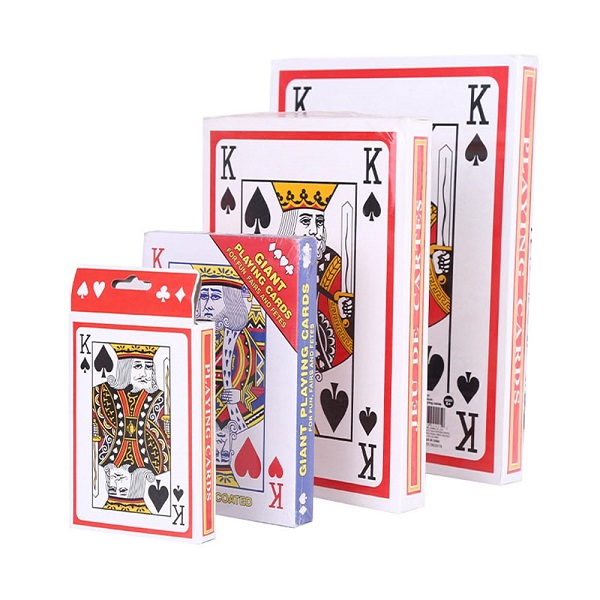
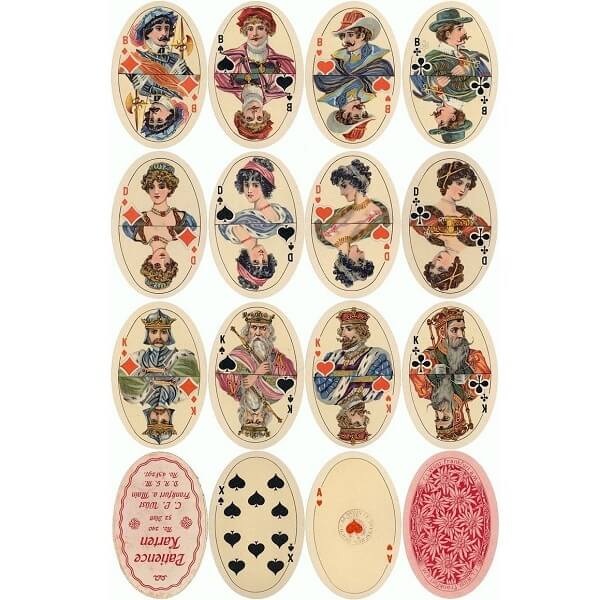
Casino-grade playing cards and personalized flash cards both fall within scope, produced in premium paper or PVC stock. Non-standard configurations — odd card counts, unusual finishes, custom die-cuts. Are supported from the first production run, not bolted on afterward.
Where Are These Decks Manufactured?
Production runs through a facility in Lanxi City, Zhejiang, China, the origin point covered throughout this guide. That single-site operation anchors every step discussed below, from material sourcing to final quality checks.
Minimum order requirements differ sharply across the printing industry. Some American printers advertise MOQs as low as 15 decks, a figure worth noting for comparison purposes. The guide that follows breaks down:
How MOQ tiers affect per-deck cost
Material and finish options tied to volume
Steps for planning a first production order
Where manufacturing location shapes turnaround and pricing
How Do You Determine The Right MOQ Tier?
Deck volume dictates the tier, not the other way around. A pilot run of a card game demands a different path than a corporate promotion needing thousands of identical decks. Matching project stage to production scale prevents wasted spend and missed deadlines.
Follow this sequence when selecting a non-standard playing cards MOQ:
Confirm the stock type first. Specialty finishes carry their own rules — a linen air-light, magic-quality black-core stock, for instance, requires a separate minimum of 1,000 units regardless of what the base deck order allows.
Estimate total volume needed, including reprints. Enterprise buyers scale into the tens of thousands of decks; press runs between 25,000 and 100,000 units are routine for retail-scale programs, and no fixed ceiling caps growth beyond that.
Check turnaround against launch date. Sample decks typically ship within seven days; bulk production runs two to four weeks. A tight campaign window should shape which tier gets selected.
Weigh capacity against reorder risk. Facilities producing over one million decks monthly, with on-time delivery rates near a notable share, absorb reorders without forcing a switch to a smaller supplier mid-campaign.
Should a Kickstarter creator start with print-on-demand instead of a factory MOQ?
Early-stage creators testing artwork or crowdfunding stretch goals often benefit from print-on-demand services, which carry no minimum on supported products. That path suits single-deck prototypes or small backer rewards. Once demand is validated and volume climbs into the hundreds or thousands, factory pricing tiers become the more economical route.
What happens if a specialty stock is chosen but volume falls below its minimum?
Orders below a specialty stock’s required minimum either get bumped to that threshold or shifted to a standard finish. Confirming stock choice before finalizing quantity avoids last-minute redesign.
How Do You Specify Materials And Card Counts?
Card count comes first, then material grade, then finish. Non-standard decks span a wide range — anywhere from 18 cards to 612 cards per deck. And that spread changes paper usage, press setup, and per-unit cost. A 40-card expansion pack behaves nothing like a 500-card trivia set on a production line. Designers should lock the count before requesting a quote.
Get a Custom Non-Standard Playing Cards Quote from WellCards
Front-and-back customization on every card is standard practice, not an upcharge. Each card in a non-standard set can carry unique artwork on both sides, which matters for games with asymmetric mechanics or flash card sets that pair a prompt with an answer. Designers should finalize this spec early, since it determines file count and proofing time.
Non-standard playing cards MOQ planning benefits from a short checklist:
Confirm total card count per deck (18–612 range).
Decide whether every card needs unique front and back art.
Choose stock type — paper or PVC — based on durability needs.
Select finish options: custom sizing, foiling, or embossing.
Flag export markets requiring compliance documentation.
What Finishes Are Available for Custom Decks?
Custom sizing, foiling, and embossing options let creators match a deck to specific gameplay mechanics or brand identity. A Kickstarter creator chasing a premium unboxing moment might combine foil accents with rounded corners. A promotional buyer may prioritize simple embossed logos.
Do Non-Standard Decks Meet Export Compliance Standards?
WellCards maintains FSC, REACH, and EN71 certifications covering EU and U.S. requirements. Corporate buyers shipping into either market need this documentation on file before launch. Full OEM/ODM design support also helps creators finalize specs before committing to a production run.
How Do You Validate Specs Before Bulk Production?
Validation starts long before a single card gets cut. Confirmation runs through four checkpoints: digital proof, physical prototype, triple-check quality control, and export certification review.
WellCards issues digital proofs within 24 to 48 hours of file submission. Designers see layout, color, and bleed on screen before committing to any production run. That window matters most for Kickstarter creators working on tight campaign timelines. A delayed proof can stall a launch date.
A digital proof only goes so far, though. Paper stock, card thickness, and finish read differently on a screen than in a shuffle. That gap is why physical prototypes matter for teams developing non-standard playing cards, decks with odd counts, unusual dimensions, or custom-shaped edges that don’t behave like a standard poker deck. WellCards credits the prototype cost back to the final order. Validating specs costs nothing extra once the buyer commits to the full run.
Do Prototypes Really Reduce Risk Before Ordering?
Yes. A prototype catches problems a proof can’t: card snap, corner rounding, box fit. Corporate promotional buyers ordering above minimum MOQ thresholds use the prototype stage to lock specs before thousands of decks go to press.
Behind the scenes, WellCards runs quality checks at three separate stages:
Pre-press review of files and color separations
Mid-run printing inspection for registration and consistency
Final inspection before packing and shipment
Should Corporate Buyers Confirm Certification Before Sampling?
Corporate buyers sourcing for the EU or U.S. market should confirm export certification during sample review, not after. WellCards decks carry EU/US certification for global export, and industry practice backs this up. Independent manufacturer comparisons recommend requesting physical samples before finalizing any vendor, regardless of quoted MOQ.
What Mistakes Should You Avoid With MOQ Planning?
Four errors sink most MOQ decisions before a single card gets printed. Mismatched manufacturer selection tops the list. A factory built for large retail programs or casino requirements typically runs a traditional custom workflow with higher minimums — fine for a national retail launch, wrong for a Kickstarter prototype run. Matching manufacturer type to project stage saves both time and budget.
Get a Custom Non-Standard Playing Cards Quote from WellCards
Is skipping durability testing really a mistake?
Yes. Buyers who skip durability verification often discover shuffle-wear and card separation only after decks reach backers or retail shelves. Request written confirmation of shuffle-count guarantees before committing to a production run. A 1,000+ shuffle durability guarantee should appear in the manufacturer’s documentation, not just marketing copy.
Pricing structure gets overlooked just as often. Sourcing through intermediaries instead of factory-direct channels can quietly inflate costs by 30 to 50 percent, eating margin that a corporate promo budget or crowdfunding campaign can’t easily absorb.
Shipping and compliance paperwork round out the common failure points. Follow these steps before finalizing an order:
Confirm carrier options — DHL, FedEx, and UPS coverage matters for delivery timing.
Verify the manufacturer ships to the destination country; global reach spanning 200-plus countries reduces customs surprises.
Request compliance documentation upfront, not after production starts.
Non-standard playing cards MOQ planning fails most often when buyers treat these four checks as optional. None of them are. Skipping any one turns a routine order into a costly delay.
Navigating minimum order quantities for non-standard playing cards requires alignment between production capabilities, design complexity, and business objectives. WellCards’ approach to flexible MOQs reflects the manufacturing realities of custom card production. Setup costs, material sourcing, and quality control protocols directly influence order thresholds. Understanding these parameters enables informed decision-making and positions your organization to achieve cost efficiency without compromising the durability. Compliance standards that distinguish premium card products in competitive markets.
FAQ
What is the minimum order quantity for non-standard playing cards?
WellCards sets a starting minimum order of 500 decks, giving indie developers and Kickstarter creators factory-direct pricing without inflated setup costs.
How long does production take after placing an order?
Samples ship within seven days for quality verification. Bulk manufacturing runs two to four weeks, with production capacity exceeding one million decks monthly.
Where does WellCards manufacture its custom playing cards?
Production runs through a single facility in Lanxi City, Zhejiang, China, anchoring every step from material sourcing to final quality checks.
 English
 Deutsch
 Français
 Polski
 Português do Brasil
 Español
 日本語
日本語 Русский
 العربية
 Italiano
 Nederlands
 Türkçe
 한국어
한국어