
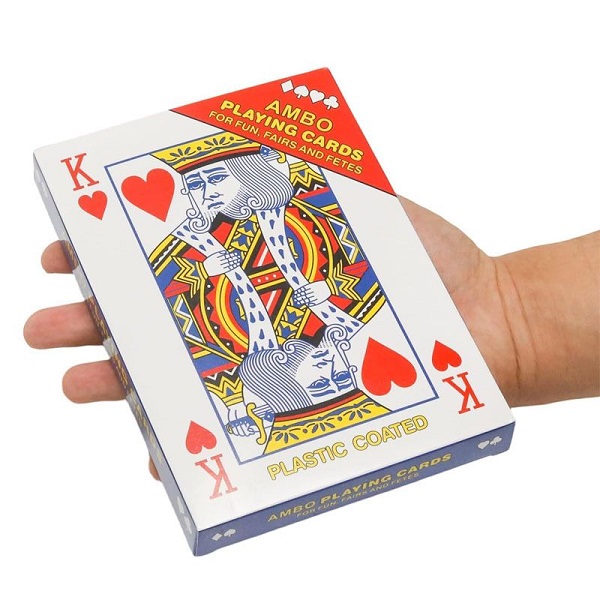
Standard playing cards follow traditional court-card designs recognized instantly across everyday games. Non-standard decks use custom artwork, sizes, or finishes for branded projects. Game designers and Kickstarter creators requiring custom decks get factory-direct production with a 1,000+ shuffle durability guarantee, EU/US compliance certifications, and sample turnaround within 7 days.
What Defines Standard vs Non-Standard Playing Cards?
Court card artwork settles the distinction. Standard playing cards rely on traditional figures for kings, queens, and jacks — designs that stay recognizable decade after decade. Non-standard decks abandon that template entirely, opening the door to custom illustration, altered suit symbols, or themed artwork built around a game’s story or brand.
Design lineage isn’t the whole picture, though. Region matters too. A deck printed for a French market may follow a different national suit system than one produced for a Spanish or German audience. Court card hierarchies shift accordingly. Even the total card count in a pack changes from one region to the next. That variation exists inside the “standard” category alone, before non-standard design choices ever enter the conversation.
Get a Custom Playing Card Quote from WellCards
Does a non-standard deck still need to meet certification standards?
Yes. Certification requirements don’t bend for creative deck design. Any manufacturer shipping playing cards into EU or US markets — traditional court figures or fully reimagined artwork. Has to meet the same compliance certifications to clear customs and reach retail shelves. Kickstarter creators sourcing print runs overseas inherit that requirement the moment cards cross a border.
WellCards produces both categories from its manufacturing facility in Lanxi City, Zhejiang, China.
Choice between the two comes down to audience expectation, not manufacturing difficulty.
How Do Design and Court Card Artwork Compare?
Court card artwork separates these two categories fastest. Standard playing cards follow the French-suited pattern, with kings, queens, and jacks rendered in familiar, recognizable poses that rarely change from deck to deck. Departures from that template land squarely in non-standard playing cards territory. Artwork answers a brand’s vision instead of a centuries-old template.
The legal definition of a playing card leaves enormous room for reinvention. A playing card qualifies as card stock, heavy paper, plastic-coated paper, or thin plastic marked with distinguishing motifs — nothing more specific than that. Nowhere does that definition require a particular figure, suit symbol, or color palette. Creators building original IP, novelty decks, or Kickstarter exclusives work well within those boundaries.
Baseline vs. departure, at a glance:
Does going non-standard limit production support?
Production support actually expands. WellCards backs unconventional projects with full OEM/ODM design assistance, guiding creators from concept sketches through finished artwork. That support covers custom sizing, foil accents, and embossing — tools rarely offered for stock, off-the-shelf decks.
Publishers weighing both paths should treat the French pattern as a proven baseline, not a ceiling. Original court figures, altered suit counts, and specialty finishes turn a deck into a collectible rather than a commodity.
Get a Custom Playing Card Quote from WellCards
How Do Materials and Durability Differ Between Decks?
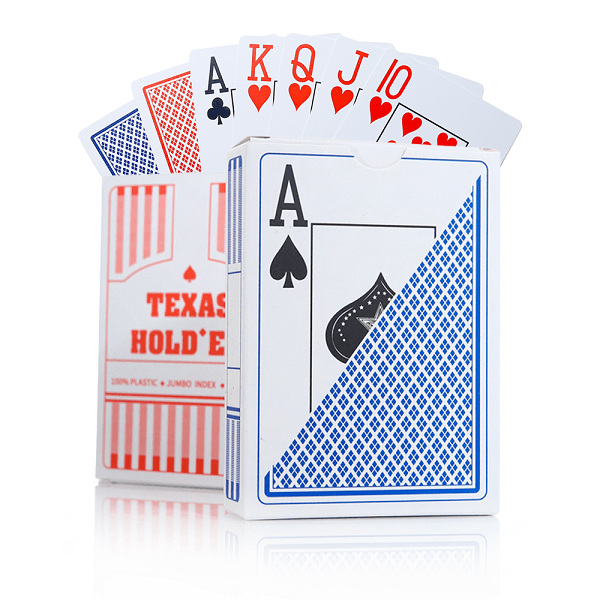
Material choice separates a deck that survives a Kickstarter unboxing video from one that curls after a single shuffle test. Standard decks favor paper stock built for familiar gameplay, while non-standard decks often demand finishes engineered for flourishing and flow. The distinction between standard and non-standard playing cards starts on the production floor, not the game table.
Cardistry exploded in popularity over the past decade, and that surge reshaped what card creators expect from a deck. Flourishers no longer settle for cards that merely play well. They want artwork and coatings tuned specifically for smooth handling, fanning, and springs. Demands that pushed manufacturers toward non-standard construction methods.
WellCards addresses both camps with premium paper or PVC options, material choices that shape shuffle feel and long-term card life. Paper stock suits traditional standard decks meant for repeated shuffling across game nights. PVC serves non-standard, flourish-heavy decks that need slickness and resistance to wear from constant flipping.
Does deck durability change between paper and PVC builds?
Both material paths carry the same 1,000+ shuffle durability guarantee at WellCards, regardless of whether a project leans traditional or experimental. Paper decks resist wear through coating quality; PVC decks resist wear through the material itself. Triple-check quality control at pre-press, printing, and final inspection stages catches inconsistencies before either type reaches a creator’s shipping box.
Which deck type holds up better for Kickstarter fulfillment?
Fulfillment volume punishes weak stock fast. Publishers shipping thousands of units benefit from consistent checks applied at every production stage, standard or non-standard, so backers open decks that shuffle cleanly from the first game night onward.
Which Customization Options Fit Each Card Type?
Standard playing cards accept modest customization: back art, box finishes, minor stock upgrades. Non-standard playing cards allow far more freedom, since court card conventions and fixed proportions no longer apply. Standard vs non-standard playing cards decisions come down to how much design risk a Kickstarter campaign or novelty card line can absorb before production begins.
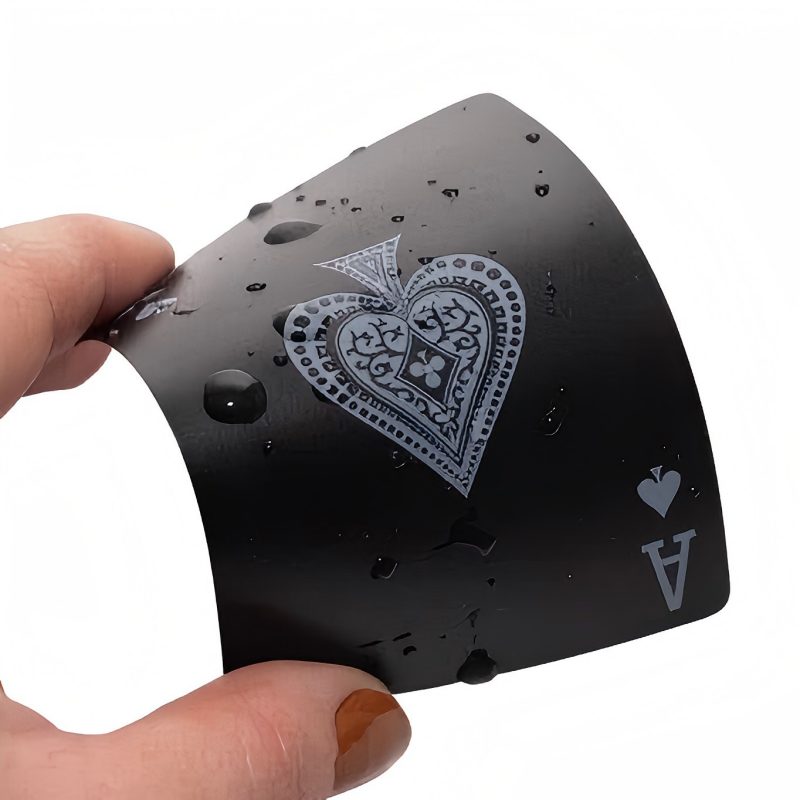
Material choice separates the two categories fastest. Unusual playing cards vary widely in design, material, and theme, extending past traditional paper or plastic into finishes rarely seen on standard stock. That variance creates opportunity, but it also raises the stakes for proofing before a full run locks in.
How fast can a Kickstarter creator get proofs and prototypes?
Digital proofs arrive within 24 to 48 hours, letting creators confirm specifications before artwork enters production. Physical prototypes follow and get credited back to the final order. That credit structure lowers cost exposure for anyone testing an odd trim size or an unfamiliar coating.
What’s the minimum order for testing a non-standard concept?
Five hundred decks. That flexible minimum lets independent designers validate a novelty concept without funding a warehouse-sized print run. Sample timelines and bulk timelines stay identical across both card types, which means switching from a standard prototype to a non-standard one costs schedule flexibility, not weeks.
For campaign creators racing a Kickstarter deadline, that consistency matters more than novelty alone.
Which Deck Type Wins for Your Project?
No single format wins across every tabletop project. The decision between standard and non-standard playing cards comes down to what players expect the moment a box opens. Standard decks win when recognition matters most: players read familiar court cards and suits instantly, which keeps everyday games moving without a rules explainer. Non-standard decks win when the goal is spectacle. Collectors, cardists, and novelty producers gravitate toward themes stretching from historical figures to abstract art, giving each deck its own identity beyond the traditional four suits.
Get a Custom Playing Card Quote from WellCards
Do standard decks still make sense for a Kickstarter launch?
Absolutely, particularly for reprints or expansion packs tied to an existing game system. Backers expect certain conventions, and breaking them without reason risks confusion at the table.
Can non-standard decks scale to retail volume?
Yes. Production capacity above one million decks monthly, paired with a a notable share on-time delivery rate, allows prototypes to move into full retail runs without losing momentum.
Neither format is inherently superior. Designers building a mass-market game lean standard; those chasing collector appeal or artistic differentiation lean non-standard. Compliance and pricing advantages apply equally to both paths.
The distinction between standard and non-standard playing cards reflects fundamental differences in design, durability, and application. Standard cards serve established gaming conventions and regulatory requirements, while non-standard variants accommodate specialized educational, promotional, and custom use cases. Organizations selecting between these formats must align their choice with intended purpose, audience, and performance requirements. This alignment ensures optimal functionality and return on investment across gaming, training, and commercial applications.
FAQ
What’s the main difference between standard and non-standard playing cards?
Court card artwork settles the distinction. Standard decks rely on traditional king, queen, and jack figures. Non-standard decks use custom illustration, altered suit symbols, or themed artwork built around a brand or story.
Do non-standard decks still need to meet certification requirements?
Yes. Certification requirements don’t bend for creative design. Any manufacturer shipping into EU or US markets must meet the same compliance certifications, regardless of traditional or reimagined artwork.
Where does WellCards manufacture standard and non-standard decks?
WellCards produces both categories from its manufacturing facility in Lanxi City, Zhejiang, China, offering factory-direct production for game designers and Kickstarter creators.
 English
 Deutsch
 Français
 Polski
 Português do Brasil
 Español
 日本語
日本語 Русский
 العربية
 Italiano
 Nederlands
 Türkçe
 한국어
한국어