
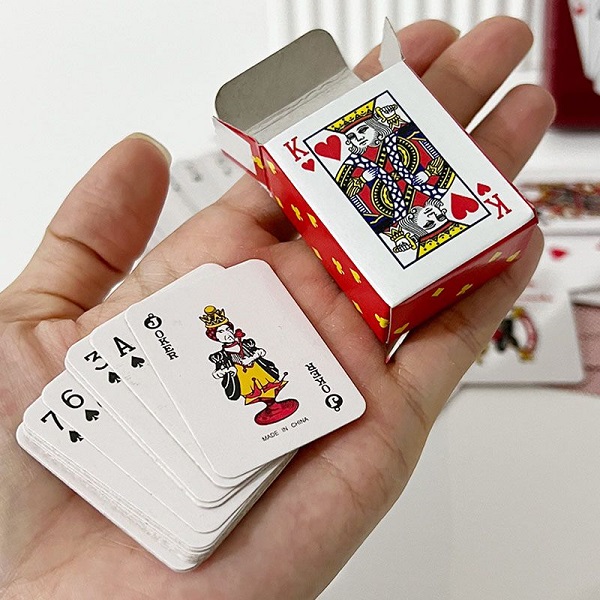
Standard playing cards measure 2.5 x 3.5 inches. Non-standard sizes include Bridge (2.25 x 3.5 inches), Tarot (2.75 x 4.75 inches), and Mini (1.75 x 2.5 inches) formats. Manufacturers like WellCards, based in Lanxi City, Zhejiang, China, produce custom dimensions for specialty games, collectibles, and promotional decks beyond these standard measurements.
Non-standard playing card sizes—including tarot, square, bridge-narrow, jumbo, oracle, and mini formats—go beyond the standard 2.5″ × 3.5″ poker size and suit specific game mechanics, branding, or shelf differentiation. Based in Lanxi, Zhejiang, China, WellCards offers offset printing on premium paper or PVC with custom dimensions and shapes, 1,000+ shuffle durability, 7-day samples, included proofs, and bulk production in 2–4 weeks.
Why Do Non-Standard Card Sizes Matter?
Card dimensions decide whether a deck feels right in the hand — or wrong. A tarot spread crammed into a poker frame loses its drama. A pocket-sized flash card meant for a training session becomes unreadable across a boardroom table. Established manufacturers print standard formats and customized card dimensions and shapes side by side, because specialized decks demand it.
Game type drives the math. Card dimensions vary significantly depending on the specific game and its intended use. A trading card game deck, a tarot set, and a corporate training kit rarely share one mold.
Get a Custom Non-Standard Playing Cards Quote from WellCards
What Counts as a Non-Standard Playing Card Size?
Any dimension departing from the familiar poker or bridge trim qualifies as a non-standard playing card size. Square decks, jumbo formats, oversized tarot spreads, and rounded mini cards for promotional inserts all fall into this category. Deck publishers reaching for a distinct shelf presence usually start here.
WellCards builds custom sizing into its production line, alongside foiling and embossing that push a deck past standard dimensions. That combination lets promotional merchandise designers match card shape to brand identity instead of settling for a generic frame.
Does Sizing Affect the Design Process?
Design support matters just as much as the die-cutting. WellCards offers full OEM/ODM design assistance, guiding creators from concept sketch through finished production run. Event planners and indie publishers gain a production partner, not just a vendor filling an order.
Consider the stakes. A mismatched card size slows gameplay, frustrates players mid-shuffle, and undercuts a brand’s first impression at retail or across a convention table.
What Are the Standard Playing Card Size Options?
Two measurements dominate the deck-printing world: poker size and bridge size. Poker size cards run 2.5 x 3.5 inches, the format found in nearly every casino, board game, and promotional deck on the market. Bridge size trims down to 2.25 x 3.5 inches, built for bridge, euchre, pinochle, and games where smaller hands and tighter fanning matter.
The difference sounds minor. It isn’t, once cards land in a player’s hand.
Which size should a tabletop game creator pick?
Poker size suits most new deck projects, especially those aimed at general retail or promotional use. Bridge size works better for card-heavy games where players hold large hands. Need a narrower profile to fan them cleanly. Event planners producing branded decks for trade shows usually default to poker size. It reads well from across a table.
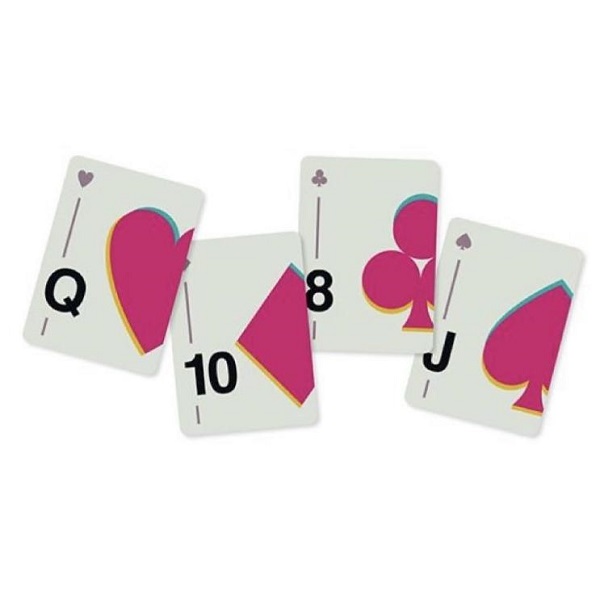
Neither dimension is mandatory, though. Some projects call for a custom deck dimension outside the standard poker and bridge templates. Square formats, tarot-length cards, or oversized promotional pieces. WellCards builds decks in premium paper and PVC stock, sized to the specifications a project requires. Cards produced this way carry EU/US export certification, which matters for indie publishers and distributors planning to sell across borders. Standard sizing keeps costs predictable and production timelines short. Departing from it opens design possibilities but adds engineering steps worth planning for early.
Get a Custom Non-Standard Playing Cards Quote from WellCards
Which Non-Standard Sizes Suit Your Game?
Fit dictates format. A travel deck meant for a jacket pocket has no business sharing dimensions with a tarot-style oracle set. Standard poker cards cover most tabletop games, but plenty of projects need something else entirely. Mini cards, measuring 1.75 x 2.5 inches, suit travel decks and promotional inserts especially well. Small enough to slip into packaging, large enough to stay legible.
That’s just one option among many. Manufacturers offer four standard formats — tarot, poker, square, and mini. Plus as many as 17 additional non-standard playing card size variations. Indie publishers building a niche mechanic, event planners assembling branded giveaways, and promotional merchandise designers chasing shelf differentiation all draw from this wider catalog.
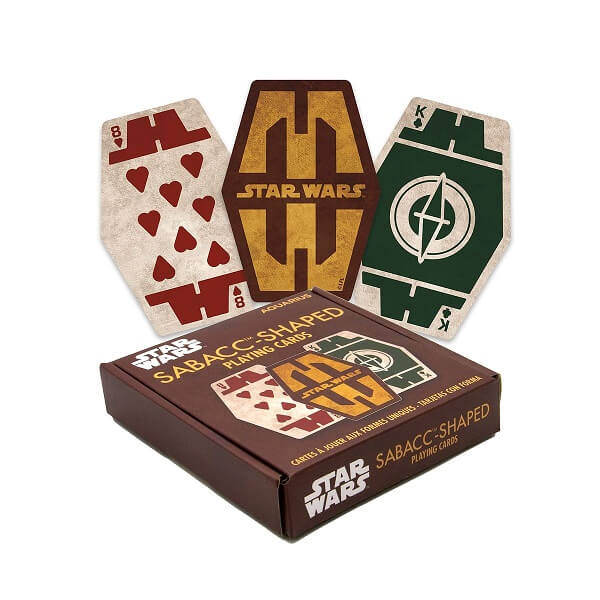
WellCards supports that range directly. Custom sizing pairs with foiling and embossing options, giving creators room to build a deck that doesn’t look like everyone else’s. A distinctive trim size paired with metallic accents turns a card set into a physical object worth photographing, not just shuffling.
Does size affect card durability?
Format changes handling, not structural integrity. Whether a deck runs mini, poker, or a custom trim, WellCards backs the build with a 1,000+ shuffle durability guarantee. That standard holds across nonstandard formats too, since construction quality — not dimension — determines lifespan.
Quick reference for common project needs:
Pocket-sized promo giveaways → mini format
Standard gameplay decks → poker size
Distinctive branded products → custom nonstandard sizing with foiling or embossing
Size selection should follow function first, branding second. Getting that order backward tends to produce cards that look sharp but frustrate players at the table.
How Does Custom Sizing Impact Cost and Quality?
Cost rises when a card departs from established templates, but quality does not have to suffer. A non-standard playing card size almost always requires a new die, the steel tool that cuts each card to shape. That tooling cost lands once, at the start of the design.
Reorders skip the die charge entirely. The tool sits ready for the next production run. A publisher who commits to an odd dimension for a themed deck or a promotional giveaway pays the setup fee a single time. Future batches move straight to printing.
Get a Custom Non-Standard Playing Cards Quote from WellCards
Does a custom size always cost more?
Upfront, yes, because of tooling. Long-term, the math shifts. Factory-direct pricing structures cut standard rates by 30 to 50 percent, which offsets the initial die investment across multi-run projects. Event planners ordering repeat decks for annual tournaments see that discount compound with each reorder.
Does non-standard sizing weaken card quality?
Not when production discipline stays consistent. Quality control runs through three checkpoints regardless of shape: pre-press review, mid-print inspection, and final check before packaging.
That triple-check process catches trim errors before they reach a shipment. For deck publishers testing an unconventional card shape for a tarot line or a square-format trivia set, the sequence matters more than the size itself. A well-managed die and a disciplined inspection chain deliver the same durability standard as any poker-sized order. Just with a shape nobody else on the shelf is using.
How Should You Order Custom-Sized Cards?
Ordering starts with a clear specification and ends with a physical check before mass production. Buyers who want a non-standard playing card size — anything outside the typical poker or bridge trim. Follow a straightforward path with WellCards: submit dimensions, review a proof, approve a prototype, then move to bulk manufacturing.
The process runs in a few defined stages:
Specify dimensions and materials. Provide exact measurements, paper or PVC preference, and finish requirements.
Review digital proofs and physical prototypes. WellCards includes proofs and prototypes in the ordering process, so buyers confirm size and design accuracy before committing to volume.
Approve and move to production. Once specifications check out, the order advances to manufacturing.
Receive samples, then bulk stock. Samples arrive within 7 days. Full bulk runs complete in 2 to 4 weeks.
That timeline matters most for event planners and deck publishers working against a launch date. Skipping the prototype step to save a few days often backfires. A card that’s off by even a couple of millimeters can ruin fit in a custom box or sleeve.
Where are these custom-sized cards actually made?
WellCards operates its manufacturing facility in Lanxi City, Zhejiang, China. Production, proofing, and prototyping all happen under one roof, which keeps communication tight between design approval and the print floor.
Do custom dimensions slow down the timeline?
Not meaningfully, provided specifications are locked early. The same 7-day sample window and 2-to-4-week bulk window apply once dimensions are confirmed through the proof and prototype stage.
Non-standard playing card dimensions represent a strategic opportunity for manufacturers and designers seeking differentiation in competitive markets. The technical considerations outlined—material selection, production tolerances, and compliance requirements—demand precision and expertise to execute successfully. Organizations pursuing custom card formats benefit from partnering with manufacturers who combine deep production experience with rigorous quality control. Comprehensive design support, ensuring that dimensional specifications translate into durable, market-ready products that meet both functional and aesthetic objectives.
FAQ
What sizes count as non-standard playing cards?
Tarot, square, bridge-narrow, jumbo, oracle, and mini formats beyond the 2.5″ x 3.5″ poker standard all qualify, chosen for game mechanics, branding, or shelf differentiation.
How fast does WellCards produce custom-size decks?
WellCards, based in Lanxi City, Zhejiang, China, delivers samples in 7 days with included proofs, and completes bulk production in 2-4 weeks.
Does WellCards help with design for custom card sizes?
Yes, WellCards offers full OEM/ODM design assistance, guiding creators from concept sketch through finished production run for custom-sized decks.
 English
 Deutsch
 Français
 Polski
 Português do Brasil
 Español
 日本語
日本語 Русский
 العربية
 Italiano
 Nederlands
 Türkçe
 한국어
한국어