
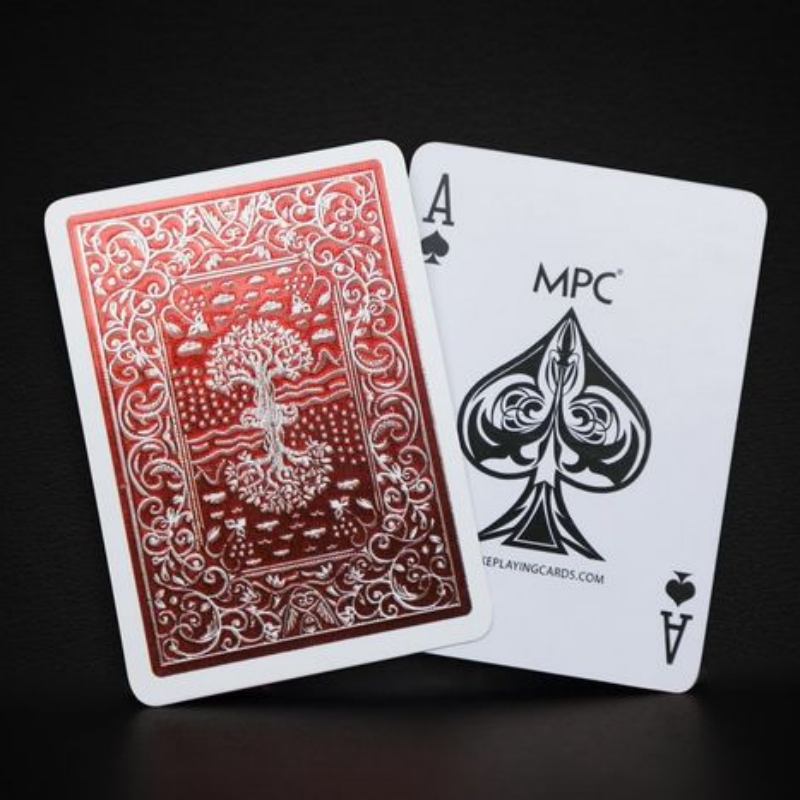
Foil stamping adds metallic accents to logos or borders, holographic finishes create shifting rainbow effects that resist counterfeiting, and gilded edges apply polished color—gold, silver, or nine other shades—along the card edge for a premium look. WellCards backs every finish with a 1,000+ shuffle durability guarantee, giving crowd-funded decks tournament-grade resilience alongside striking shelf presence.
What Makes Foil Finishes Worth The Cost?
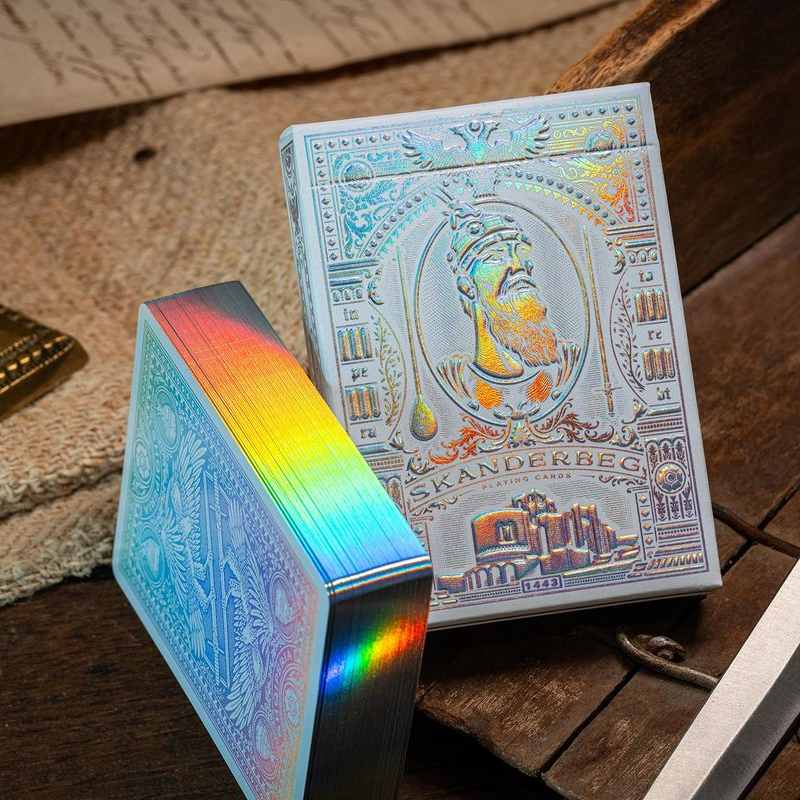
Shine sells decks before a single card gets flipped. Backers scrolling a crowdfunding page stop on light, not text. That reaction is the real return on foil playing cards. The metallic accents catch attention in a thumbnail image, which matters more than most designers admit.
Get a Custom Foil Stamped Playing Card Quote from WellCards
Foil detailing isn’t a bolt-on afterthought at WellCards. Custom sizes, foiling, and embossing all appear as configurable options on personalized decks, meaning a designer chooses where the shine lands rather than accepting a fixed template. Card backs, court cards, or a single central emblem can all carry the treatment.
Material choice shapes the outcome. Decks run in either premium paper or PVC stock, and PVC in particular holds fine foil detailing better under repeated shuffling.
How Does A Deck Get That Foil-Like Shine?
One production method layers a high-gloss polymer, rated at 99GU, over specific printed areas after full-color printing. That gloss coating creates a reflective, foil-adjacent sheen on the sections a designer targets, rather than coating the entire card.
Does Foiling Work On Small Print Runs?
Yes. Small batches run through digital full-color printing, while larger orders move to offset presses. Both methods produce deep, saturated color, which gives foil accents a richer backdrop to reflect against.
For a designer weighing budget against shelf appeal, foil isn’t decoration. It’s the difference between a deck that gets picked up and one that gets scrolled past.
How Does Holographic Foil Change Card Perception?
Light does the talking on a holographic deck. A single card catches an overhead lamp and throws back a rainbow sheen no matte or gloss finish can fake. That instant shimmer registers as premium before a single word of design gets noticed. Holographic playing cards trade on that first impression, turning a flip or a fan into a small spectacle.
The mechanics matter here. The reflective surface bends light at shifting angles as the card moves, producing a futuristic quality that apartment printing simply cannot reach. Standard finishes sit still under light; holographic foil performs under it. For crowd-funded decks competing for attention in a scroll feed, that motion-triggered shine becomes the difference between a passing glance and a saved image.
Get a Custom Foil Stamped Playing Card Quote from WellCards
Why Do Collectible Card Games Favor Holographic Finishes?
Rarity signaling is the short answer. Trading card games and collectible card games lean on holographic treatments to mark premium or limited pulls, training players to associate shimmer with scarcity. Designers borrowing that convention for playing cards import instant credibility along with it.
Production support shapes how well that shimmer executes. Full OEM/ODM design assistance lets creators specify exact foil placement and confirm artwork alignment before a single sheet runs. Misaligned foil ruins the effect faster than a weak card stock does. Proofing that placement matters as much as choosing the finish.
Export logistics deserve mention too. EU/US certification clears gilded edge playing cards and holographic decks for international sale without added compliance delays, which matters for publishers shipping to backers across multiple countries.
What Exactly Are Gilded Edge Playing Cards?
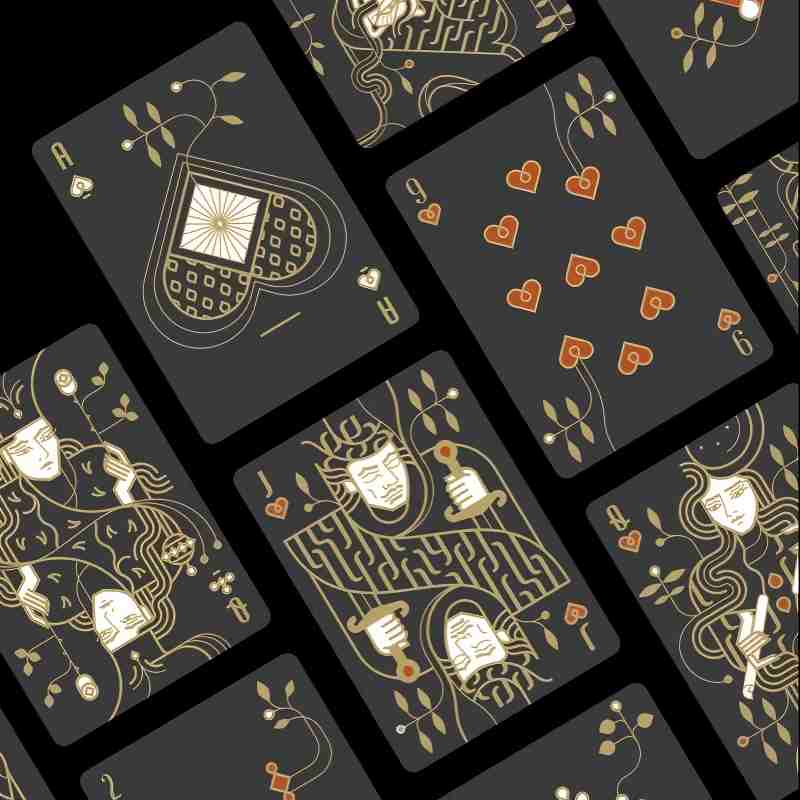
A metallic border applied to the outer rim of each card defines gilded edge playing cards. The finish coats the deck’s edge in a polished layer of color, giving personalized decks a luxurious appearance the moment a box opens. Card creators chasing a premium unboxing moment for a crowdfunded run often lean on this detail precisely because it reads as expensive.
The effect works on sight and on touch. Polished gilt edge finishing is built to catch attention the instant a deck lands in someone’s hands, delivering the kind of visual payoff that turns a casual buyer into a collector. For magicians and cardists, that reaction matters during a reveal — the fan, the riffle, the spread across a table.
Gold dominates the category, but it isn’t the only option. Gilt edge color extends well beyond gold into a broader palette, including:
Silver
Holographic
Bronze
Additional custom tones
Does the Gilt Finish Hold Up to Regular Handling?
Durability matters more than shine for decks meant to be shuffled, not shelved. A deck built for repeat use should carry a documented shuffle-life guarantee. WellCards backs its foil playing cards and gilded editions with a 1,000+ shuffle durability standard. That number matters for magicians running the same deck night after night.
Gilding pairs naturally with other premium finishes. Casino-grade holographic playing cards and standard stock alike can be printed to exact specifications, whether the end use is a gaming table, a promotional giveaway, or a retail shelf. Gilded edge playing cards simply add one more layer of shelf-stopping polish to that foundation.
Which Finish Fits Your Deck Project Best?
Budget and timeline decide the answer more often than aesthetics do. A designer chasing maximum shine for a Kickstarter reveal needs a different production path than a magician ordering a small custom run for close-up work. Three finishes dominate the premium deck market: foil playing cards, holographic playing cards, and gilded edge playing cards. Each carries its own cost logic, and factory-direct pricing changes that math substantially. Pricing varies by package, so contact the brand directly for specific cost details.
Small print runs used to price premium finishes out of reach for indie publishers. That barrier has narrowed. Minimum order quantities starting at 500 decks put foiling, holographic effects, and gilded edges within reach of crowd-funded projects and limited-edition drops, not just large casino accounts.
How fast can a custom finish sample arrive?
Seven days, typically, from order to sample in hand. Bulk production then follows within two to four weeks once the finish and specs are locked. That window lets a publisher test gilding or holographic foil before committing capital to a full run.
What stops a defective finish from reaching backers?
Triple-check quality control catches most problems before shipment. Inspection happens at three stages: pre-press, printing, and final review. Foil edges elevator, holographic layers misalign, gilding chips—each defect gets caught at one of those checkpoints rather than after a backer opens the box.
How Fast Can Premium Finishes Reach You?
Speed depends on proofing, not guesswork. WellCards delivers digital proofs within 24 to 48 hours, letting designers confirm foil placement, holographic angles, or gilded edge coverage before a single card enters production. That turnaround matters most to creators racing a Kickstarter countdown or a convention deadline. Waiting weeks for a proof kills momentum; a two-day window keeps a launch calendar intact.
Get a Custom Foil Stamped Playing Card Quote from WellCards
How does prototype testing work before a bulk order?
Physical prototypes get produced and shipped. Designers can hold the actual foil playing cards or holographic playing cards finish in hand. The cost of that prototype gets credited back to the final order, so testing carries no wasted expense. Cardists and magicians in particular rely on this step. Finish behavior under repeated handling can’t be judged from a screen.
What happens after the deck ships?
Once a design clears prototype approval, production scales into distribution. WellCards ships through DHL, FedEx, and UPS, reaching more than 200 countries with full compliance documentation attached to every shipment. That documentation spares indie publishers the customs delays that stall crowd-funded rewards from clearing international borders.
Behind that shipping network sits real manufacturing muscle. Monthly capacity exceeds one million decks, paired with a 99.9 percent on-time delivery rate. For a publisher juggling thousands of backer addresses, that reliability figure isn’t a marketing flourish. It’s the difference between a fulfillment cycle that closes clean and one buried in refund requests.
The selection between foil, holographic, and gilded edge finishes ultimately depends on your specific application, budget constraints, and desired aesthetic impact. Each technique delivers distinct visual and tactile properties that enhance card durability and perceived value. By evaluating your production requirements against the technical capabilities. Cost-benefit profiles of each finishing method, you position your custom playing cards for optimal market performance and user satisfaction.
FAQ
What is the difference between foil, holographic, and gilded edge finishes?
Foil stamping adds metallic accents to logos or borders, holographic finishes create shifting rainbow effects that resist counterfeiting, and gilded edges apply polished gold, silver, or other colors along the card edge for a premium look.
Which card material holds foil detailing best under repeated shuffling?
PVC stock holds fine foil detailing better than premium paper under repeated shuffling. WellCards offers both material options and backs every finish with a 1,000+ shuffle durability guarantee.
Can small print runs still get foil-like finishes?
Yes, small batches run through digital full-color printing while larger orders move to offset presses, and both methods produce deep, saturated color that gives foil accents a richer backdrop to reflect against.
 English
 Deutsch
 Français
 Polski
 Português do Brasil
 Español
 日本語
日本語 Русский
 العربية
 Italiano
 Nederlands
 Türkçe
 한국어
한국어