
Invisible ink offers covert security for hidden markings. Neon UV ink provides high-intensity glow under blacklight for dramatic visual effects. WellCards manufactures both options using advanced fluorescent ink technology with organic compounds that absorb UV radiation. Clients receive factory-direct pricing with full EU/US compliance certifications.
Get a Custom UV-Reactive Playing Card Quote from WellCards
What Are the Key Differences?
The key differences between invisible UV ink playing cards and neon fluorescent playing cards come down to visibility under normal light. The specific UV-reactive ink type used. Invisible UV ink remains transparent in standard lighting and reveals hidden designs only under ultraviolet exposure. Neon fluorescent ink is visible in daylight and intensifies dramatically under UV light.
Which Ink Type Creates a Hidden Effect?
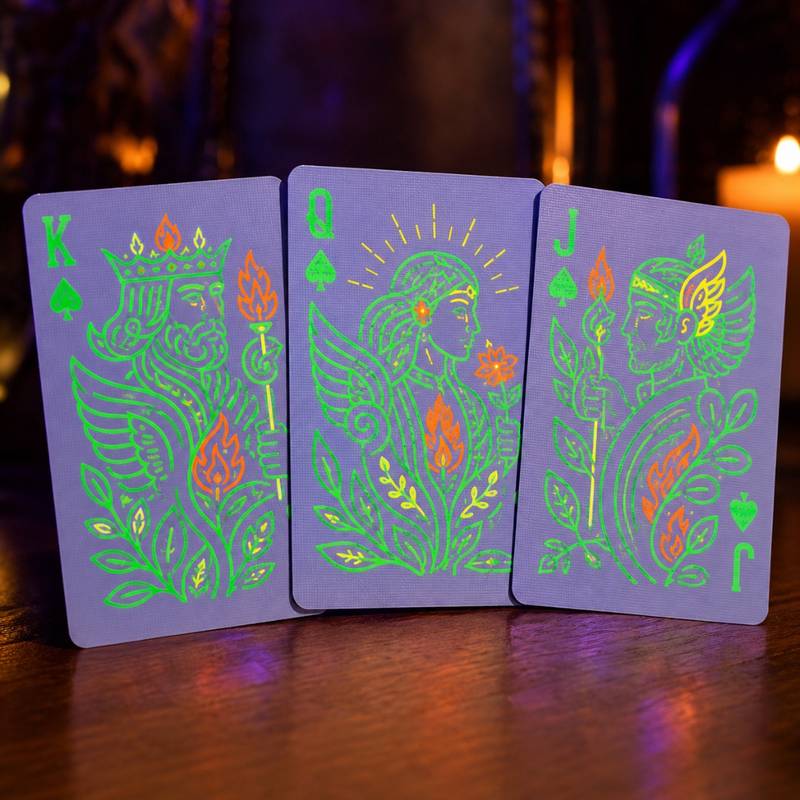
Invisible UV ink playing cards use a transparent ink that stays invisible under normal light. The design appears only when a UV flashlight or blacklight source hits the card surface. This creates a concealed layer suited for marked decks, security features, or reveal effects in magic routines. The hidden effect depends entirely on the ink’s transparency in ambient conditions.
Which Ink Type Produces a Brighter Glow?
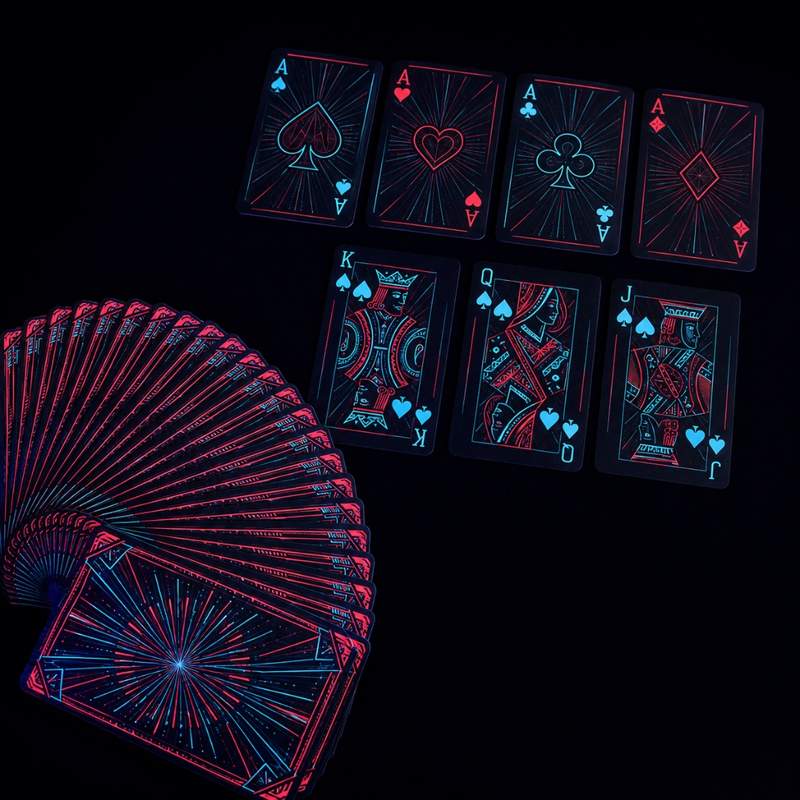
Neon fluorescent playing cards use high-intensity fluorescent ink applied to both card front and back. The ink intensifies under UV lighting to produce a bright, saturated glow. WellCards applies this ink through a multi-layer system that combines standard CMYK base colors with fluorescent pigment overlays. The fluorescent pigments contain organic compounds that absorb ultraviolet radiation and re-emit it as visible light in specific wavelengths.
The manufacturing requirements differ as well. Invisible UV ink demands precise registration to keep the hidden layer undetectable in daylight. Neon fluorescent ink requires careful pigment formulation to achieve consistent glow intensity across both card faces and the tuck box. WellCards formulates custom ink blends to match specific brand requirements for either approach.
How Do the Visual Effects Compare?
The visual effects of invisible UV ink playing cards and neon fluorescent playing cards differ fundamentally in how they interact with light. Invisible UV ink remains completely hidden under normal lighting. Neon fluorescent ink produces a constant, vibrant glow the moment ultraviolet light hits the surface.
Get a Custom UV-Reactive Playing Card Quote from WellCards
What Is the Reveal Effect of Invisible UV Ink?
Invisible UV ink creates a dramatic reveal. The printed design stays unseen until exposed to a UV light source. This property makes the ink ideal for magic tricks and hidden messages. A deck can appear entirely blank in daylight. Under blacklight, secret artwork or text suddenly emerges. The Fluorescent Playing Cards by MPC notes this effect suits dark environments where a magician performs under UV spot lighting.
How Does Neon Fluorescent Ink Behave Under UV Light?
Neon fluorescent ink delivers a continuous bright glow. The ink contains organic compounds that absorb ultraviolet radiation and re-emit it as visible light. This process creates intense neon effects across the entire printed design. The artwork remains fully visible and saturated in dark conditions. WellCards formulates custom ink blends to match specific brand colors. The result is a deck that never looks dull under blacklight.
Can Both Ink Types Be Combined in One Deck?
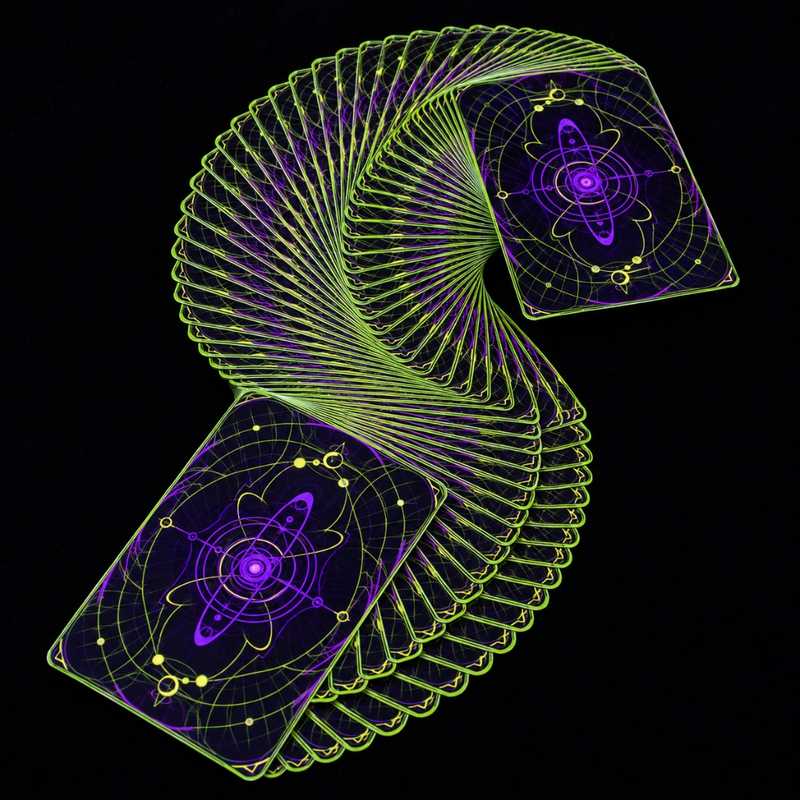
A single deck can use both ink types alongside standard CMYK printing. WellCards employs a sophisticated multi-layer ink system for this purpose. Standard CMYK base colors form the visible artwork. Fluorescent pigment overlays add the glow effects. Invisible UV layers introduce hidden elements. The combination creates complex visuals that shift between normal and UV light conditions. A card back might show a standard logo in daylight. Under blacklight, hidden UV patterns and neon borders activate simultaneously.
|
Which Ink Type Suits Your Design?
The right UV reactive ink type depends on whether the design needs hidden elements or constant visibility. Invisible UV ink playing cards serve one purpose. Neon fluorescent playing cards serve another. The distinction matters for cardistry, gaming, and promotional work.
Invisible UV ink suits designs requiring concealed content. A cardist and creator from Germany, Christof Schmitz, built his Glow deck around this feature. The ink remains unseen under normal light. Under a UV flashlight, hidden messages, security marks, or surprise reveals appear. This approach works for secret reveals in performances and for anti-counterfeit features on limited editions.
Neon fluorescent ink takes the opposite path. The Fluorescent deck from MPC demonstrates the effect. The deck is specifically made for dark environments such as bars and nightclubs. Under UV lighting, the neon colors intensify and shock the audience. Promotional decks, night events, and themed gaming sets benefit from this constant high-visibility glow.
What is the difference between invisible and neon UV ink?
Invisible UV ink stays hidden until exposed to ultraviolet light. Neon fluorescent ink remains visible in normal light and intensifies under blacklight. The choice hinges on whether the design requires concealment or constant display.
Which ink type works best for cardistry performances?
Invisible UV ink creates surprise reveals during cardistry routines. The performer controls when hidden elements appear. Neon fluorescent ink delivers continuous visual impact in dark venues. Both options serve different performance goals.
WellCards provides full OEM/ODM design support for clients selecting between these UV reactive ink types. The company evaluates design intent, performance requirements, and production constraints before recommending an ink system. Clients preparing custom playing card artwork files receive guidance on how each ink type affects print specifications. The wrong choice limits the deck’s function. The right choice defines it.
What Are the Cost and Setup Factors?
Cost and setup for UV reactive playing cards hinge on ink chemistry and print complexity. Invisible UV ink playing cards demand a separate print pass and specialized formulations, which raises initial setup costs compared to standard CMYK printing. Neon fluorescent playing cards integrate more directly into existing workflows, often reducing per-unit expenses.
Get a Custom UV-Reactive Playing Card Quote from WellCards
The distinction between UV reactive ink types determines both production speed and final pricing. Invisible UV inks require precise registration and a dedicated print station. The multi-layer ink system combines standard CMYK base colors with fluorescent pigment overlays containing organic compounds that absorb ultraviolet radiation and re-emit visible light. This additional pass increases setup time and material cost.
Neon fluorescent ink follows a simpler path. High-intensity fluorescent ink is applied as a standard overlay to card fronts, backs, and tuck boxes. The process slots into conventional print sequences without extra registration steps. Per-unit costs drop accordingly.
How does invisible UV ink affect production costs?
Invisible UV ink adds a dedicated print pass. The specialized ink formulation costs more than standard offset inks. Registration demands precision. These factors combine to increase setup charges. For short runs, the per-deck cost rises noticeably.
What makes neon fluorescent ink more cost-efficient?
Neon fluorescent ink functions as a standard overlay. It requires no separate print station. The ink integrates into the existing CMYK workflow. This streamlined process reduces both setup time and material waste. Production moves faster from proof to finished deck.
WellCards provides factory-direct pricing that saves 30 to 50 percent on custom card production, including all UV reactive ink options. Flexible minimum order quantities start at 500 decks. The company’s triple-check quality control applies across every print pass, ensuring color accuracy and registration integrity without hidden surcharges.
Which Option Does WellCards Recommend?
WellCards recommends neon fluorescent playing cards for maximum visual impact under UV light. The company advises invisible UV ink playing cards for applications requiring hidden elements or security features. The choice depends entirely on the deck’s intended use.
What makes neon fluorescent ink the better choice for visual impact?
Neon fluorescent ink delivers consistent brightness and durability. WellCards uses a sophisticated multi-layer ink system that combines standard CMYK base colors with fluorescent pigment overlays. These inks contain organic compounds that absorb ultraviolet radiation and re-emit it as visible light. The result is an intense, reliable glow that holds up through repeated handling.
When should invisible UV ink be selected instead?
Invisible UV ink suits dual-purpose decks where hidden elements matter. The ink remains unseen under normal light and reveals itself only under blacklight. WellCards formulates custom ink blends that integrate invisible layers with standard printing. A deck can function as a conventional product while concealing security marks, easter eggs, or secondary artwork.
The company provides free design consultation and digital proofs within 24 to 48 hours. Clients evaluate both UV reactive ink types before committing to production. This process eliminates guesswork. Designers see exactly how each ink performs under normal and UV conditions. The proof stage confirms brightness levels, hidden-layer visibility, and overall aesthetic alignment with the project’s goals.
FAQ
What is the main difference between invisible UV ink and neon fluorescent playing cards?
Invisible UV ink stays transparent under normal light and reveals hidden designs only under UV exposure. Neon fluorescent ink remains visible in daylight and intensifies dramatically under blacklight.
Which ink type works best for hidden markings or security features?
Invisible UV ink creates a concealed layer for marked decks, security features, or reveal effects in magic routines. The design appears only when a UV flashlight or blacklight hits the card surface.
Which ink type produces a brighter glow under blacklight?
Neon fluorescent ink delivers a continuous bright glow using organic compounds that absorb ultraviolet radiation and re-emit visible light. WellCards applies it through a multi-layer system with fluorescent pigment overlays for high-intensity saturation.
Conclusion
The decision between invisible UV ink and neon fluorescent ink rests on the deck’s intended function, not on production capability. Clients seeking concealed elements or security features select invisible UV ink for its hidden reveal layer. Those prioritizing continuous visual impact in dark venues choose neon fluorescent ink for its intensified glow. WellCards evaluates design intent and performance requirements before recommending an ink system. The proof stage confirms performance before production begins.
 English
 Deutsch
 Français
 Polski
 Português do Brasil
 Español
 日本語
 Русский
 العربية
 Italiano
 Nederlands
 Türkçe
 한국어