
When it comes to custom card decks production errors, precision in file setup determines print quality: verify correct color mode and dieline alignment before submission. Small errors can delay production by weeks and increase costs. Choose from 13 professional-grade card stocks. Partner with manufacturers like WellCards, based in Lanxi City, Zhejiang, China, for quality control.
Production errors in custom card decks stem from skipped proofing steps and unclear specs. Deck creators avoid costly reprints through digital proofs delivered within 24-48 hours, physical prototypes credited back to final orders, and triple-check quality control spanning pre-press, printing, and final inspection—catching color, bleed, and stock issues before committing to a 500-deck minimum run.
What Do You Need Before Printing Custom Decks?
Preparation determines whether a custom deck reaches players intact or arrives full of misaligned cuts and color shifts. Skipping the groundwork causes custom card decks production errors that delay Kickstarter timelines and drain small-studio budgets. A short checklist, followed in order, prevents most of that damage.
Get a Custom Playing Card Quote from WellCards
Lock specifications through a design consultation. Indie developers and deck publishers submit artwork for a free design consultation, then review a digital proof within 24 to 48 hours to confirm dimensions, card stock, and finish before anything reaches the press.
Order a physical prototype. A printed sample lets tarot creators and game designers hold the actual card weight, check shuffle feel, and catch color or cutting issues that a screen never reveals.
Test gameplay with that prototype. Many creators start here — printing a small batch to test mechanics, balance rules, and gather player feedback before committing to volume.
Confirm the minimum order quantity. Flexible MOQs starting at 500 decks allow small studios to run a limited test print instead of gambling on a massive first batch.
Does the prototype cost get wasted if the design changes?
No. The prototype’s cost gets credited back to the final order once the design is confirmed. Testing a deck costs nothing extra in the long run. That credit removes the financial hesitation many first-time publishers feel about ordering a physical sample. Confirming specs early, then testing physically before scaling production, closes the gap where most costly deck errors originate.
How Do You Prepare Print-Ready Card Files?
Print-ready files require correct color mode, precise dieline alignment, and clean bleed margins before submission. Mass production of a card game presents a technical challenge entirely separate from creative design work. Many indie developers spend months perfecting art. Mechanics, then lose weeks to file errors that a five-minute check could have caught.
A small misstep in file setup causes outsized damage. Wrong color profiles, misaligned dielines, or missing bleed can delay production by weeks, inflate costs, and produce misprinted components nobody wants to ship. Independent creators often pour their energy into art, mechanics, and packaging design. The technical side of print gets underestimated. That’s precisely where projects stall or collapse before a single deck rolls off the press.
What Should Designers Check Before Submitting Files?
Confirm these four items before sending artwork to any print partner:
Color mode — convert files to CMYK, not RGB, to match press output.
Dieline placement — verify die-cut lines sit on their own layer and match the card’s exact dimensions.
Bleed and safety margins — extend background art past the trim edge and keep text well inside it.
Resolution — set images to 300 DPI minimum to avoid blurred or pixelated cards.
How Does OEM/ODM Support Reduce Production Errors?
Custom card decks production errors shrink dramatically when a manufacturer reviews files before printing begins. Full OEM/ODM design support confirms that submitted artwork matches production specifications before a single sheet enters the press. That review step catches dieline and color problems early, sparing tarot publishers and oracle deck creators the cost of a reprint.
A design consultation adds another layer of protection. Files get checked against material choice, card size, and finishing options — foiling, embossing, rounded corners. So the final deck matches the designer’s original vision, not a compromised version shaped by preventable technical errors.
How Do You Choose Card Stock and Finishes?
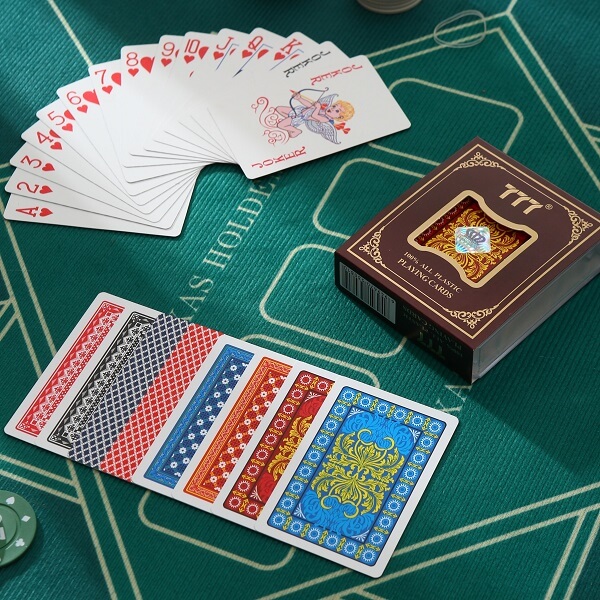
Material selection determines durability, feel, and shuffle performance long before a single card reaches a table. Publishers weighing paper against PVC face a decision that shapes reprint costs and player experience for years to come. WellCards produces custom playing cards using premium paper or PVC material options, matched to the intended use—paper suits collectible or narrative decks. PVC handles casino-grade or high-frequency play.
Get a Custom Playing Card Quote from WellCards
Picking the wrong stock ranks among the most common custom card decks production errors indie developers make. A tarot deck printed on flimsy stock delaminates after a handful of readings. A game deck meant for tournament play warps under humidity within a season. Card manufacturing runs on specialized printing equipment purpose-built for the tight tolerances that card stock demands. Home printers and generic offset presses cannot replicate that precision.
Selecting finishes follows the same logic: match the option to function, not just appearance.
Steps for choosing stock and finishes before submitting print files:
Define the deck’s primary use—collectible, gameplay, or educational.
Select paper for lighter handling or PVC for repeated shuffling.
Choose a corner style: square for classic decks, rounded for shuffle durability.
Add foiling or embossing only where contrast supports readability.
Confirm hole punching or packaging needs before finalizing dielines.
Available finishing options include:
Custom sizes for nonstandard card formats
Foiling for metallic accents
Embossing for tactile detail
Rounded corners for shuffle longevity
Hole punching for flash card sets
Bespoke packaging for retail presentation
Which Card Stock Feels Most Durable?
Durability varies across the dozens of professional-grade stocks available industry-wide—some manufacturers offer more than a dozen distinct grades. Thicker, coated stocks resist bending and staining better than uncoated alternatives. For decks expected to survive years of handling, that difference decides whether a project holds up or falls apart in customers’ hands.
How Does Quality Control Catch Errors Early?
Three checkpoints stand between a raw file and a finished deck. WellCards runs a triple-check quality control process spanning pre-press, printing, and final inspection, catching flaws before a single deck ships. Skip any one of these stages. Misaligned art, color drift, or die-cutting mistakes reach a publisher’s warehouse instead of the recycling bin. For tarot creators and indie game designers, that gap between “looks fine on screen” and “prints correctly” is exactly where budgets and deadlines collapse.
Get a Custom Playing Card Quote from WellCards
Custom card decks production errors typically surface in one of three places:
Pre-press review — files get checked for bleed, resolution, and color mode before plates or digital setup begin.
Printing stage inspection — operators monitor color consistency and registration as sheets run.
Final inspection — finished decks undergo a last check for cutting accuracy, card count, and finish quality before packing.
Does compliance certification matter for card exports?
Yes. Decks headed to European or American markets need documentation, not just good printing. WellCards maintains FSC, REACH, and EN71 certification, covering sustainable sourcing, chemical safety, and toy-safety standards relevant to card products. A deck without proper certification can stall at customs, regardless of how sharp the artwork looks.
How is durability actually tested?
Every finished deck carries a 1,000-plus shuffle durability guarantee. That standard matters most for oracle and tarot publishers, whose decks get handled far more than a typical game card. Cards that delaminate or fray after a few dozen shuffles damage a brand’s reputation fast.
Scale reinforces the whole system. Monthly output above one million decks, paired with a a notable share on-time delivery rate, means quality checks happen at volume without sacrificing schedule reliability. A critical detail for anyone planning a Kickstarter launch date.
What Mistakes Still Delay Custom Deck Orders?
Late file corrections and unclear shipping expectations cause most custom card decks production errors among indie publishers. Missed proofing windows push launch dates back weeks. Unverified compliance paperwork stalls shipments at customs. Tarot creators and prototype developers lose Kickstarter momentum when a deck arrives after a promised ship date.
Avoiding these errors follows a sequence, not a guess.
Confirm sample turnaround before setting a launch date. Samples ship within seven days, and bulk runs finish in two to four weeks.
Lock final art before requesting the bulk run. Changes submitted after sampling restart the proofing clock and push bulk production later.
Verify carrier and destination early. Deliveries move through DHL, FedEx, and UPS to more than 200 countries, each shipment carrying full compliance documentation for customs clearance.
Cross-check specifications against decades of manufacturing history. The Lanxi facility applies checks built from three decades of production experience, catching stock defects and misaligned dielines before bulk printing starts.
Why Do Custom Deck Timelines Slip?
Publishers often underestimate proofing time. A sample review that gets rushed or skipped extends the bulk production window instead of shortening it. Building the seven-day sample stage into a launch calendar prevents that surprise.
Does Shipping Cause Delays Too?
Yes, and often at the border rather than the factory. Missing paperwork holds shipments at customs checkpoints for days. Full compliance documentation attached to every DHL, FedEx, and UPS shipment keeps that risk low across more than 200 destination countries.
FAQ
How does a digital proof prevent production errors?
A digital proof arrives within 24-48 hours after a design consultation, letting creators confirm dimensions, card stock, and finish before files reach the press.
Why order a physical prototype before mass production?
A prototype reveals card weight, shuffle feel, color accuracy, and cutting issues that screens miss, and its cost gets credited back to the final order.
What file setup mistakes cause the biggest delays?
Wrong color mode, misaligned dielines, and missing bleed margins delay production by weeks and inflate costs, so files must use CMYK and precise dieline placement before submission.
 English
 Deutsch
 Français
 Polski
 Português do Brasil
 Español
 日本語
 Русский
 العربية
 Italiano
 Nederlands
 Türkçe
 한국어