
When it comes to customize non-standard playing cards for brand marketing, custom playing cards from manufacturers like WellCards in Lanxi City, Zhejiang, China, deliver brand marketing impact through tailored card sizes, unique die-cut shapes, foil-stamped logos, and full-color box printing. Businesses select premium 310gsm black-core stock, custom tuck boxes, and matching brand colors to create memorable promotional decks for trade shows and customer gifts.
Card Stock and Packaging: Select from 13 professional playing-card grade stocks, then customize backs, faces, and boxes with brand colors, logos, and messaging. WellCards, based in Lanxi City, Zhejiang, China, offers no-minimum-order production, letting brands test unique designs affordably before scaling larger runs.
Custom playing card marketing starts with casino-grade stock, foiling, embossing, rounded corners, and bespoke packaging tailored to a brand’s identity. WellCards guarantees 1,000+ shuffles per deck, delivers digital proofs within 24-48 hours, and produces physical prototypes credited back to bulk orders, ensuring campaign-ready decks reach agencies and marketing teams in 2-4 weeks.
What Do You Need Before Customizing Cards?
Four things stand between a brand manager and a finished custom deck: a manufacturing partner, a design plan, format decisions, and a realistic calendar. WellCards supplies premium custom playing cards and flash cards for brands, educators, and distributors worldwide, which makes it a practical starting point for a marketing card project rather than a generic print shop. Skipping any of these four elements leads to reprints, missed campaign dates, or decks that don’t match the promotional concept.
Get a Custom Non-Standard Playing Cards Quote from WellCards
Does the manufacturer need to help with design?
Yes, and full OEM/ODM design support removes the guesswork from concept development. This support covers the project from the first sketch. Marketing teams without an in-house card designer aren’t left improvising layout and print-ready files on their own.
What format decisions come before production?
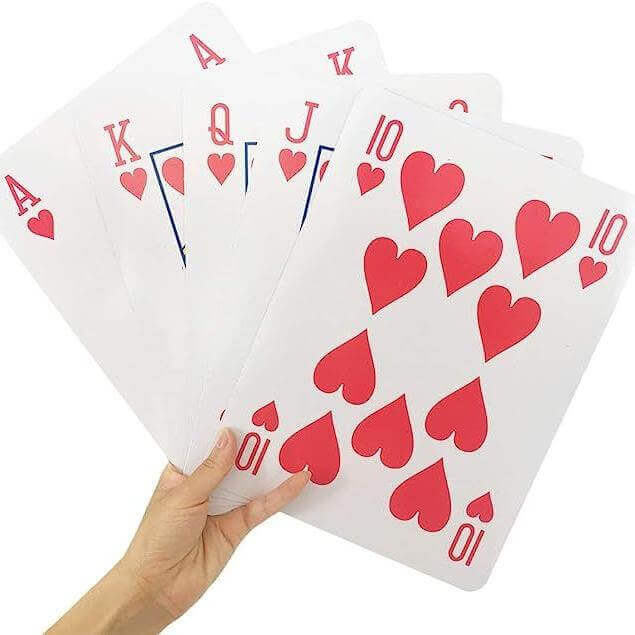
Format is where a deck stops looking generic and starts working as a brand asset. Custom sizes, foiling, and embossing are all available for teams planning to customize non-standard playing cards for brand marketing rather than order an off-the-shelf print run. Before production begins, brand managers should settle:
Card dimensions and shape, since non-standard sizing affects packaging and shipping costs.
Finish details such as foil stamping or embossed texture, which strengthen tactile brand recognition.
Face and back artwork specifications, delivered as production-ready files.
Timeline planning closes the checklist. Samples arrive within seven days, and bulk orders complete in two to four weeks. That window lets creative agencies map card delivery against launch dates, trade shows, or seasonal campaigns without last-minute scrambling.
How Do You Choose Card Stock And Finish?
Card stock selection begins with matching material to campaign lifespan. Brand managers who customize non-standard playing cards for brand marketing initiatives need decks that survive their specific environment—trade show tables, retail shelves, or repeated casino-style shuffling. Two material families dominate premium production: paper stock and PVC.
Follow this sequence when specifying stock and finish:
Identify how the deck will be used—one-time giveaway, retail product, or high-frequency play piece.
Select paper or PVC based on that use case; PVC withstands moisture and heavy handling, while paper stock offers a classic tactile feel at a lower cost.
Confirm the durability threshold needed. A 1,000+ shuffle guarantee supports decks built for repeated promotional or retail use without premature wear.
Pick a face design and packaging format from the available range.
Add a coating or laminate to lock in the branded finish and protect printed artwork.
What card stock feels most premium?
Casino-grade linen stock sets the benchmark. Industry providers commonly offer 310 gsm linen paper built around a black core, delivering the textured, opaque snap associated with high-end tables. That black-core construction blocks light from passing through the card, a detail experienced players notice immediately.
How many design options are typically available?
Selection usually spans several face designs and multiple packaging types, alongside coating or laminate choices for the branded finish. Five face styles paired with four box formats is a common range across the category. Creative agencies planning multi-SKU campaigns should confirm which combinations a given
How Do You Design Branded Card Faces?
Precision drives every design decision. Casino-grade custom playing cards get printed to exact specifications, whether the goal is a gaming release, a promotional giveaway, or a retail branding push. That precision starts with a clear plan for the face, the back, and everything in between.
Brand managers who customize non-standard playing cards for brand marketing typically build their design around three surfaces: the back, the faces, and the packaging. Treating all three as one connected canvas creates a full-suit takeover rather than a single branded accessory. A logo on the back means little if the face design feels like an afterthought.
Get a Custom Non-Standard Playing Cards Quote from WellCards
What Should Go on the Card Face Itself?
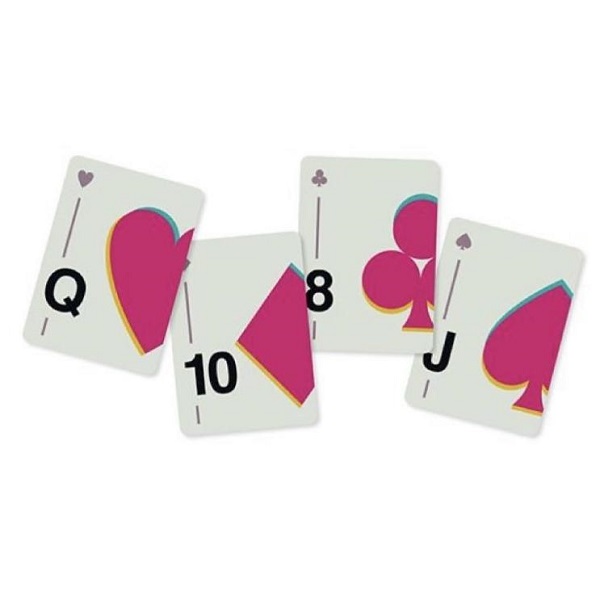
Face design carries more marketing weight than most teams expect. Numbers and suits still need to read instantly during play. Brand elements work best around the borders, corners, or court card artwork rather than over the index.
Which Finishes Extend the Design Beyond a Standard Deck?
Standard playing card dimensions and finishes are not the ceiling. Custom sizes, foiling, and embossing push the design further, giving decks a tactile, premium feel that apartment print cannot match.
A structured approach helps agencies and event teams stay organized during production:
Lock the brand assets first — logo, color codes, tagline.
Choose which elements live on the back versus the face.
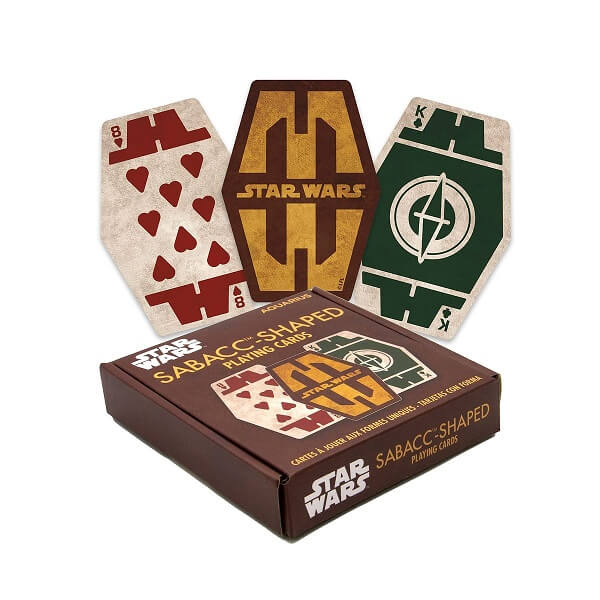
Decide on finishing touches: foil accents, embossed textures, or custom card shapes.
Select packaging that matches the deck’s end use, whether that is retail display or an event giveaway.
Decks built this way serve a wide range of purposes. Promotions, giveaways, team merchandise, retail display items, and personal gifts all draw on the same design logic: consistent branding, considered finishes, and a face design that still plays like a real deck of cards.
How Do You Confirm Quality Before Bulk Runs?
A four-step verification process confirms quality before any bulk run leaves the factory floor. Skipping this process risks costly reprints, mismatched brand colors, and stalled campaign timelines. Brand managers who invest a few extra days upfront avoid weeks of delay later.
The process runs in a fixed order:
Request a physical sample. Digital mockups rarely capture texture, weight, or finish accurately. A sample deck in hand shows exactly how a custom card design will feel to end users at a trade show or retail counter.
Review the prototype against original specifications. Proofs and prototypes are built into production to confirm dimensions, color, and material choices before full manufacturing begins.
Check certification documentation. Cards intended for regulated retail or promotional channels in Europe or the United States need EU/US compliance backed by full certifications.
Confirm export readiness. Custom playing cards carry EU/US certification specifically to clear global export requirements, a detail agencies shipping internationally cannot afford to overlook.
Why does a physical sample matter more than a digital proof?
Screens lie about color, gloss, and card stock rigidity. A physical sample reveals shuffle feel, print sharpness, and packaging fit. Details that decide whether a promotional deck reads as premium or cheap.
What happens if certification gets skipped?
Shipments without EU/US certification risk being held at customs or rejected by retail partners with compliance requirements. That single oversight can derail an entire campaign launch date.
Agencies working to customize non-standard playing cards for brand marketing should treat this four-step check as non-negotiable, not optional polish. Quality confirmed early protects budget, timeline, and brand reputation before thousands of decks roll off the line.
What Mistakes Should You Avoid At Scale?
Scaling a campaign order magnifies small errors into expensive ones. Cost overruns, missed deadlines, and mismatched minimum order quantities top the list. Brand managers who customize non-standard playing cards for brand marketing often lose margin by routing orders through layered intermediary suppliers instead of factory-direct manufacturers. WellCards operates from Lanxi City, Zhejiang, China, and that direct factory setup saves clients 30-a notable share compared to reseller pricing. A gap that compounds fast on a five-figure run.
Get a Custom Non-Standard Playing Cards Quote from WellCards
Follow these steps before committing to a large order:
Confirm pricing is factory-direct, not marked up through a middleman.
Match the manufacturer’s minimum order quantity to actual campaign volume.
Verify stated production capacity against the promised delivery window.
Request proof of on-time delivery performance for past large orders.
Does MOQ Really Matter For Large Campaigns?
It matters more than most planners expect. A manufacturer built for rapid prototyping rarely handles high-volume retail programs well. Higher minimum order quantities and a traditional production workflow suit large rollouts and casino-grade requirements far better than small-batch testing.
Can Production Keep Pace With A National Launch?
Capacity separates reliable partners from risky ones. A facility producing over 1 million decks monthly, paired with a a notable share on-time delivery rate, absorbs sudden volume increases without stalling a launch date.
Customizing non-standard playing cards for brand marketing requires a strategic alignment of design vision, production capability, and quality assurance. Organizations that prioritize durable materials, compliance standards, and precise specification management establish competitive advantages in market differentiation and customer engagement. By partnering with manufacturers equipped to deliver comprehensive design consultation, rapid prototyping, and rigorous quality control, brands transform custom card products into reliable marketing assets that reinforce brand identity and drive measurable business outcomes.
FAQ
Is there a minimum order requirement?
No. WellCards offers no-minimum-order production, letting brands test unique designs affordably before scaling to larger runs.
How long does custom card production take?
Digital proofs arrive within 24-48 hours, samples ship within seven days, and bulk orders complete in two to four weeks.
What materials work best for branded decks?
Choose PVC for moisture resistance and heavy handling. Paper stock for a classic tactile feel at lower cost, both backed by a 1,000+ shuffle guarantee.
 English
 Deutsch
 Français
 Polski
 Português do Brasil
 Español
 日本語
日本語 Русский
 العربية
 Italiano
 Nederlands
 Türkçe
 한국어
한국어