
When it comes to customize non-standard playing cards for educational and training use, wellCards, based in Lanxi City, Zhejiang, China, customizes non-standard playing cards for educational and training use through tailored sizes, thicknesses, finishes, and full-color printing, incorporating custom question sets, diagrams, or terminology per deck to match specific curricula, corporate training modules, or skill-building programs requested by clients.
Custom decks require 300 DPI artwork on coated stock, with color-coded categories for quick topic identification, plus custom boxes and dividers for organized training kits. WellCards, based in Lanxi City, Zhejiang, China, produces these curriculum and corporate training decks starting at a 15-deck minimum order quantity with bulk volume pricing.
Non-standard educational and training decks require color-coded categories, custom sizing, and 300 DPI printing for sharp diagrams and text. Instructional designers select coated stock or PVC and add custom boxes and dividers. Mr. Playing Card offers a minimum order quantity (MOQ) of 15 decks. WellCards delivers digital proofs within 24–48 hours and finished curriculum kits within 2–4 weeks.
What Will You Achieve With Custom Training Decks?
Retention improves when learners hold something durable in their hands. Custom decks built for classrooms and corporate training programs deliver exactly that: double-sided cards, engineered stock, and layouts designed around how people actually memorize material. WellCards manufactures these tools from its facility in Lanxi City, Zhejiang, China, applying three decades of card production experience to educational formats rather than gaming alone.
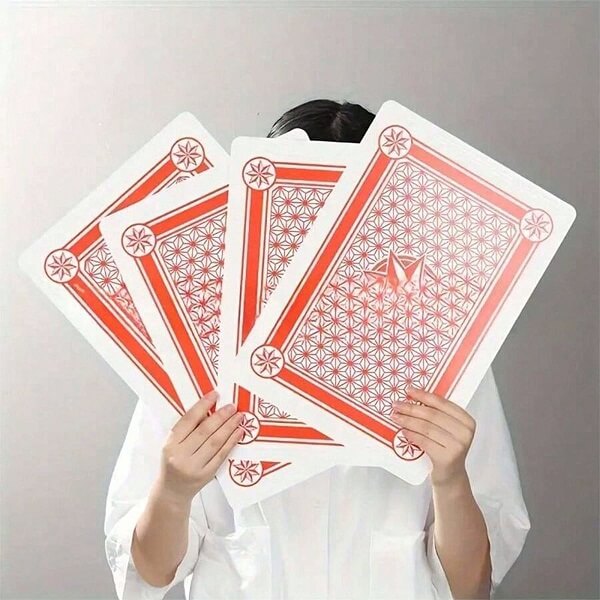
Get a Custom Non-Standard Playing Cards Quote from WellCards
The outcome depends on the buyer’s purpose. Instructional designers who customize non-standard playing cards for educational and training use typically pursue one of a few measurable goals:
Faster recall through color-coded categories that separate topics at a glance
Longer product life via reinforced, double-sided card stock that survives repeated classroom or workshop handling
Higher engagement in corporate wellness programs, e-commerce onboarding kits, and casino-style promotional training exercises
Consistent branding across curriculum sets, publisher add-ons, and training modules
Who actually orders custom flash and playing card decks?
Buyers cluster into three groups. K-12 and higher-education curriculum teams order sets for structured lesson plans. Corporate training departments and publishers request decks for onboarding kits, compliance modules, or add-on products tied to existing course materials.
Do these decks work outside the classroom?
Yes. Card-based formats extend into corporate wellness programs and e-commerce training kits, not just school settings. Durability and design optimization matter equally in a wellness workshop or a distributor’s training bundle. A facilitator running a multi-week program needs cards that survive dozens of sessions without curling, fading, or delaminating. The same standard a teacher expects from a semester-long unit.
What Tools, Materials, And Specs Should You Gather?
Five categories determine whether a training deck survives daily handling: material, finish, artwork file, stock, and design freedom. Instructional designers who customize non-standard playing cards for educational and training use should confirm each one before contacting a manufacturer. Skipping this step invites reprints, delays, and wasted budget.
Gather the following before submitting a project brief:
Confirm the handling environment first. Classrooms and workshops that see daily shuffling call for PVC; lighter-use training kits work fine on premium paper.
Decide on visual differentiation needs. Custom sizes, foiling, and embossing separate category cards, difficulty tiers, or answer keys at a glance.
Prepare artwork in CMYK. Printers work from CMYK files, not RGB, so converting early avoids color mismatches at proof stage.
Select a stock built for the deck’s purpose. Different stocks are engineered for shuffle, snap, and longevity — a match matters more than most designers assume.
Specify any non-standard shape or layout. Full OEM/ODM design support means a template isn’t required; oversized cards, rounded corners, or custom dividers can be built from a brief alone.
What material holds up best for repeated classroom use?
PVC outperforms paper for high-frequency handling, resisting bending, moisture, and wear across repeated sessions. Paper stock remains a sound choice for one-time workshops or lower-budget training kits where longevity matters less than cost.
Does artwork need to be print-ready before requesting a quote?
Not necessarily — early conversations can proceed with rough concepts. Final files, though, need CMYK conversion and correct bleed before production begins. Color shifts and layout errors surface at the proof stage rather than after printing.
How Do You Design A Non-Standard Deck Step By Step?
Six deliberate stages separate a rough idea from a finished, playable deck. Skipping any one of them tends to surface as a printing delay or a misaligned card face later on.
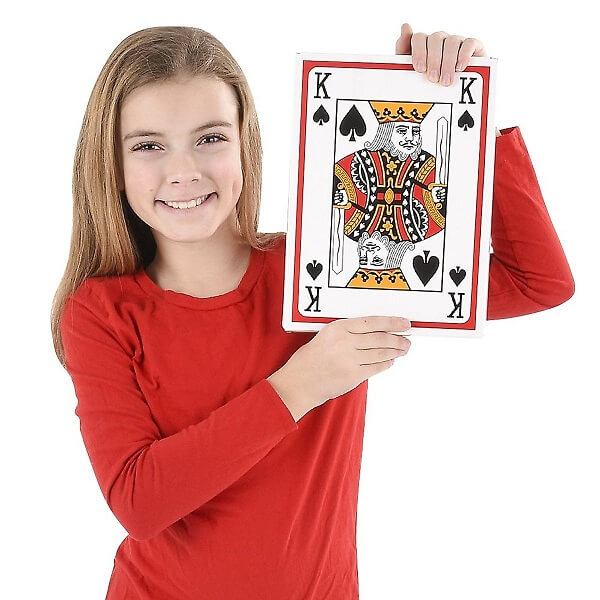
Get a Custom Non-Standard Playing Cards Quote from WellCards
Step 1: Submit a concept brief. Instructional designers and workshop facilitators send curriculum goals, card count, and any branding requirements. A free design consultation follows, giving the project a defined scope before artwork begins.
Step 2: Build the source artwork as vectors. Designers typically construct card faces in Illustrator, sketching by hand and vectoring the results using a controlled set of brushes, textures, and colors. That consistency keeps every card in the deck visually unified, no matter how many symbols or icons appear.
Step 3: Map rotated symmetry. Non-standard decks still get shuffled, dealt, and flipped in every direction. Symbols, numbers, and category markers need to read correctly no matter how the card lands in someone’s hand.
Step 4: Assign color-coded categories. Facilitators running multi-topic training kits benefit from color-coded printing paired with custom boxes and dividers, which keeps curriculum sections separated inside a single deck rather than scattered across several.
Step 5: Lock in faces and backs. Custom faces and backs give instructional designers full control over branding, instructions, or content on both sides of the card — not just one.
Step 6: Review the digital proof. Proofs typically arrive within 24 to 48 hours, letting teams confirm layout, color, and text before committing to a full print run.
What Software Do Most Card Designers Use?
Illustrator dominates this workflow because vector artwork scales cleanly across dozens of card sizes without losing sharpness. A small, repeatable set of brushes and textures also keeps a 52-card education deck looking like one coherent product instead of fifty-two separate ones.
How Long Does Proofing Take Before Printing Starts?
Digital proofs generally arrive within one to two business days of file submission. Reviewing that proof carefully catches layout or color issues before they turn into a reprint request.
How Do You Proof, Produce, And Order Decks?
Ordering a custom deck follows a fixed sequence, not a guessing game. Facilitators who need to customize non-standard playing cards for educational and training use move through design review, prototyping, sampling, and production before a single box ships.
What does the ordering process actually look like?
Submit curriculum content, category color codes, and card counts for a free design consultation covering both OEM and ODM builds.
Request a physical prototype. This copy gets credited back to the final order, so a facilitator can shuffle-test a training deck in an actual workshop before committing to volume.
Approve the design, then order sample decks. Samples ship within seven days — enough time to check readability, corner rounding, and box fit before scaling up.
Confirm the bulk order. Full production runs complete in two to four weeks, a window that fits most semester or quarterly training calendars.
Every order, sample or bulk, passes triple-check quality control at pre-press, printing, and final inspection. No deck skips a stage.
How fast can large training orders ship?
Production capacity exceeds one million decks per month, which matters for districts or corporate training teams ordering across multiple departments. On-time delivery runs at a notable share, backed by shipment through DHL, FedEx, and UPS. Completed orders reach clients in more than 200 countries with full compliance paperwork attached. Customs delays rarely interrupt a training rollout already on the calendar.
What Mistakes Undermine Educational Card Projects?
Four recurring errors derail educational card projects before a single deck reaches a classroom. Skipping compliance verification tops the list. Materials sold across EU and US markets require FSC, REACH, and EN71 certification, and instructional designers who overlook this step risk shipments flagged at customs or rejected by school procurement offices entirely.
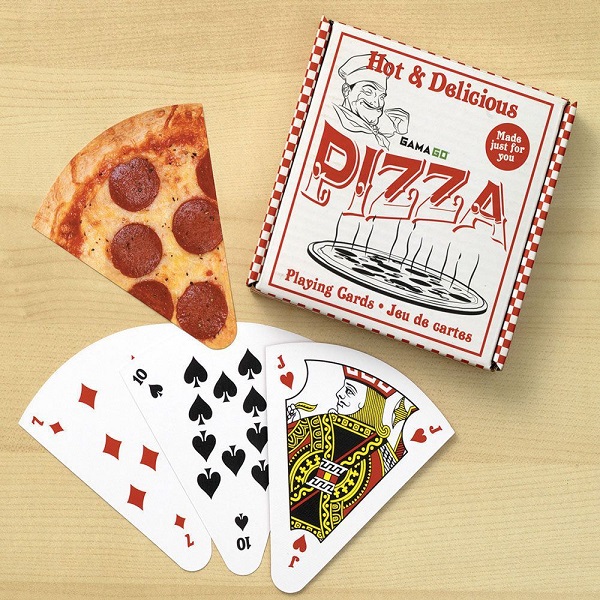
Get a Custom Non-Standard Playing Cards Quote from WellCards
Why does compliance certification matter for training decks?
Certification confirms that paper, ink, and coatings meet safety and sourcing standards required for materials handled by students and trainees. Vendors lacking documentation leave buyers exposed to compliance disputes mid-order, which stalls program launches.
Pricing mistakes follow close behind. Ordering through resellers rather than sourcing directly can inflate costs by 30 to 50 percent, a margin that shrinks training budgets fast. Stock selection causes a third failure point: decks without a 1,000-shuffle durability guarantee wear thin under the repeated handling common in workshops and classrooms.
How much stock should a pilot program order?
Overordering before a design is validated wastes budget on an unproven concept. Flexible minimum order quantities starting at 500 decks let facilitators test a curriculum deck at small scale first.
Verify FSC, REACH, EN71 certification before signing a purchase order
Compare factory-direct pricing against reseller markups
Confirm shuffle durability testing on proposed card stock
Start with a pilot run near the 500-deck minimum, not a bulk commitment
Customizing non-standard playing cards for educational and training applications requires a strategic alignment of design specifications, material selection, and production capabilities. Organizations that prioritize durability, compliance, and design precision establish a foundation for sustained engagement and measurable learning outcomes. By partnering with manufacturers equipped to deliver comprehensive customization—from concept through final delivery—institutions optimize both the pedagogical value. Operational efficiency of their card-based training programs.
FAQ
What specifications do custom educational card decks require?
Custom decks require 300 DPI artwork on coated stock, with color-coded categories for quick topic identification, plus custom boxes and dividers for organized training kits.
Who typically orders custom training and flash card decks?
K-12 and higher-education curriculum teams order sets for structured lesson plans, while corporate training departments and publishers request decks for onboarding kits, compliance modules, or add-on products tied to existing course materials.
Do custom playing card decks work outside traditional classrooms?
Yes, card-based formats extend into corporate wellness programs and e-commerce training kits, requiring the same durability and design optimization as classroom settings for repeated handling across multiple sessions.
 English
 Deutsch
 Français
 Polski
 Português do Brasil
 Español
 日本語
日本語 Русский
 العربية
 Italiano
 Nederlands
 Türkçe
 한국어
한국어