
When it comes to non-standard playing cards design, custom card design requires 300 DPI artwork, CMYK color mode, and a 2-3mm bleed margin per side. WellCards in Lanxi City, Zhejiang, produces non-standard sizes using 300gsm to 350gsm black-core cardstock, ensuring precise die-cutting templates match final trim dimensions before submitting print-ready PDF files.
Card Stock Selection determines print quality: choose from 13 professional grades, including 11 paper stocks and 100% plastic stock, then finalize artwork in CMYK before ordering—WellCards, based in Lanxi City, Zhejiang, China, recommends confirming color mode with your printer beforehand.
What Do You Need Before Designing Custom Cards?
Five things settle the groundwork: genre, mechanics, color mode, proof stage, and a manufacturing partner. Skipping any one of them turns a promising deck into a reprint headache. Non-standard playing cards design demands more preparation than a standard 52-card deck. Custom shapes, sizes, and finishes leave little room for guesswork once files hit the press.
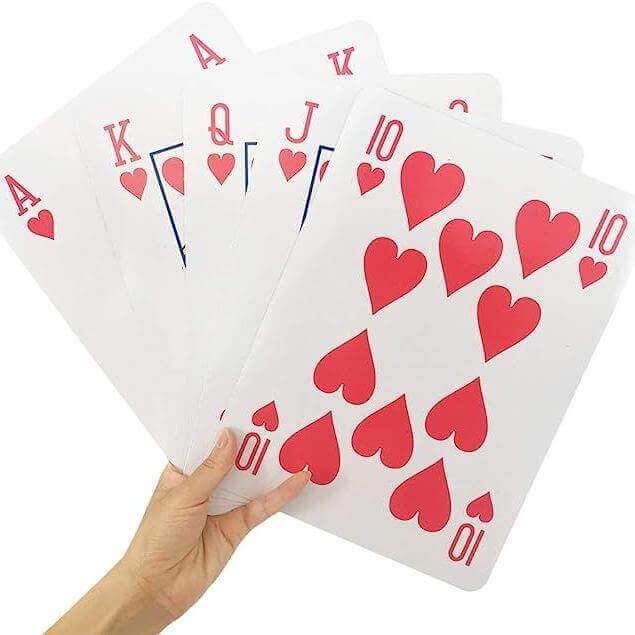
Get a Custom Non-Standard Playing Cards Quote from WellCards
What game elements should a designer lock down first?
Genre and mechanics come before artwork. Card games, board games, roleplaying games, and story games all place different demands on card count, suit structure, and text hierarchy. Deciding early which category a project falls into prevents costly redesigns after illustration work begins.
Designers should complete these steps in order before submitting files for production:
Define the game’s genre and mechanics, since rule complexity shapes card layout and quantity.
Build every asset in CMYK color mode, matching the printer’s technical specifications rather than relying on RGB previews.
Request digital proofs to confirm bleed, trim, and color accuracy before committing to a full run.
Order a physical prototype, holding the actual card stock and finish in hand before bulk printing begins.
Select a manufacturing partner capable of OEM/ODM support for irregular shapes, custom sizing, and specialty finishes.
Does a manufacturer really need to be involved this early?
Yes. WellCards offers full OEM/ODM design support, guiding designers through irregular formats before a single sheet gets printed. Digital proofs and physical prototypes are built into the workflow, catching spec errors early rather than after a shipment arrives. The company runs its production facility in Lanxi City, Zhejiang, China, giving designers a single point of contact from concept through finished deck.
How Do You Choose A Non-Standard Card Format?
Format choice starts with the game itself, not the printer’s catalog. Illustrators and indie designers who skip this step often end up reprinting entire decks after a shuffle test fails. Non-standard playing cards design demands a decision process, not a guess.
Four steps guide that process from concept to production-ready file.
Map the gameplay actions first. Decide how the deck gets shuffled, dealt, and discarded before locking a size. A deck built for rapid-fire card games needs a format that survives repeated handling, not just a striking illustration.
Lock exact dimensions early. Casino-grade printing runs on precise specifications, so submit exact measurements rather than approximate ones. Precision here prevents costly resizing later in prepress.
Layer in finishing details. Custom sizing pairs with foiling and embossing to push a deck beyond standard poker dimensions. These options exist specifically to support unconventional formats — oversized tarot spreads, narrow mini-decks, square card stock.
Check certification requirements for the target market. Decks headed for European or American retail shelves need EU/US certification for export clearance. Skipping this step risks a finished product that can’t legally reach the intended audience.
What Size Should A Non-Standard Deck Be?
No single size fits every game. Size follows function: a memory game favors smaller, denser cards. A tarot-style narrative deck benefits from extra surface area for artwork. Test a prototype size against real hand movements before finalizing dimensions.
Do Non-Standard Formats Cost More To Produce?
Custom dimensions and finishing touches add production complexity compared to standard poker sizing. Foiling, embossing, and odd-sized die-cuts require additional setup, though factory-direct production keeps that cost manageable. Designers should confirm finishing options with a manufacturer before finalizing artwork files. Some effects demand specific bleed and safe-zone allowances.
How Do You Set Up Print-Ready Card Files?
Four elements determine whether a card file survives production: color mode, artwork format, sample verification, and compliance documentation. Skip any one of them, and a deck stalls in prepress or fails inspection after the print run is already paid for. The steps below follow the order a designer should tackle them, from software setup through final approval.
Build every file in CMYK color mode. RGB files shift dramatically once they hit an offset or digital press, turning bright illustrations muddy or apartment. Confirm the printer’s exact CMYK profile before starting a single layer.
Construct artwork as vector graphics. Software such as Adobe Illustrator lets a designer build non-standard playing cards design elements — icons, borders, custom suits — that scale cleanly from a poker-size card up to a jumbo tarot format without pixelation.
Separate bleed, trim, and safe zones on every template. Non-standard shapes and rounded corners need extra margin built in, since a die-cut edge that lands even a millimeter off can slice through text or artwork.
Order a physical sample before committing to a bulk run. A printed proof reveals color drift, stock texture, and edge alignment that a screen never shows. Samples typically arrive within seven days, giving a designer a real check before a two-to-four-week bulk print begins.
Confirm compliance documentation for the target market. Files headed for retail shelves in the EU or US should account for required certifications during file setup, not after the run ships.
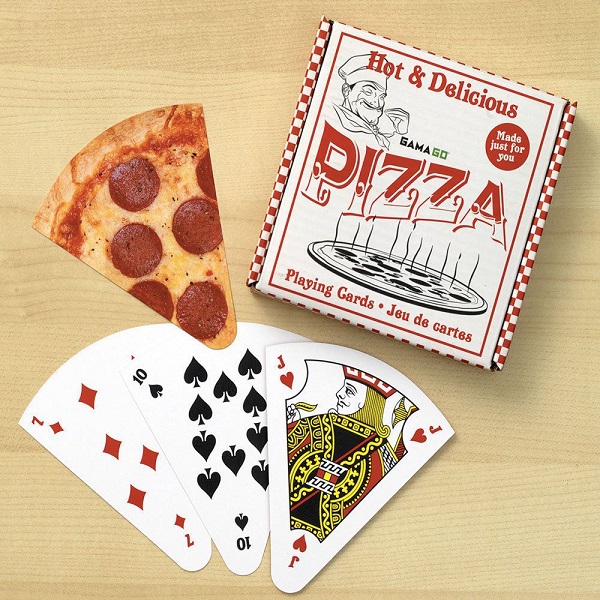
Get a Custom Non-Standard Playing Cards Quote from WellCards
Why does vector artwork matter more for non-standard decks?
Non-standard formats — oversized tarot cards, mini decks, unusual die-cuts — magnify any flaw in raster art. Vector files hold sharp lines and clean color fills no matter how the final trim size changes, which raster images simply cannot guarantee.
How Do You Design Rotated Symmetry And Backs?
Rotated symmetry means every court card, pip, and border reads correctly right-side up and upside down. Designers should treat this step as the most technically demanding part of the entire layout. Few design challenges test precision the way a queen’s scepter or a jack’s sleeve does when it must mirror perfectly across a card’s center line.
Vector software makes the process manageable. Illustrator files built for non-standard playing cards design hold up under scaling. The same artwork later resizes for tarot decks, oversized cards, or promotional prints without losing edge sharpness.
Follow this sequence for a clean rotated layout:
Draft the top half of the card first, keeping every element inside the visible border.
Duplicate the layer and rotate the copy exactly 180 degrees.
Align both halves against the card’s true center point, not just the visual midpoint.
Scan for stray shadows, uneven line weights, or shifted text that break the mirror effect.
Apply the same rotation check to the card back pattern before locking the files.
Why Does Card Back Symmetry Matter?
Card backs conceal orientation during shuffling. A pattern with heavier ink on one edge tips off attentive players. Backs need the same 180-degree consistency as the faces. Consistent backs also speed up print inspection, since flaws show up fast against a mirrored grid.
Production partners offering OEM/ODM design support review these files before printing begins. That review catches misaligned symmetry and back-pattern errors early, sparing a costly redesign after proofs arrive. Getting the rotation right the first time keeps a deck’s production timeline intact.
Which Materials And Finishes Suit Your Deck?
Paper stock and PVC stock define how a deck feels, ages, and survives repeated play. Designers working on non-standard playing card design face an early decision: hand feel versus durability, budget versus longevity. A casino-style deck shuffled hundreds of times demands different specs than a limited-run art deck built for display on a shelf.
Material selection follows a logical sequence:
Define the deck’s purpose first — tabletop game, collector’s item, or promotional giveaway — before touching a stock chart.
Pick premium paper stock for classic snap and texture, or choose PVC when moisture resistance and heavy shuffling matter more.
Confirm the chosen stock meets a 1,000+ shuffle durability benchmark if the deck faces repeated gameplay.
Lock finishes second. Foiling and embossing bond differently to paper than to plastic, so sequence matters.
Order a physical prototype before committing to a full production run.
How many card stock options exist for custom decks?
Manufacturers draw from a wide catalog of professional-grade stocks — paper and 100% plastic formulations sourced from specialized paper suppliers. Some catalogs list thirteen or more grades, giving illustrators real latitude to match weight and coating to a deck’s expected lifespan.
Paper stock tends to suit designers chasing a traditional card-table texture: matte finish, crisp shuffle, lower resistance to bending. PVC decks shrug off water, oil, and repeated handling, which makes them a better fit for tournament play or convention giveaways that see hundreds of shuffles.
Foiling and embossing add visual and tactile weight to borders, backs, or logos. Both finishes apply cleanly to non-standard shapes. Sizes, giving self-publishing creators a way to stand apart from apartment CMYK printing. A physical sample settles the question fast. Foil that looks brilliant on a monitor sometimes goes apartment under real studio light.
How Do You Prototype And Proof Your Deck?
Prototyping a deck follows a set sequence, not guesswork. Designers submit artwork, receive a digital proof, request a physical sample, then confirm production. Skipping steps costs money later. A card game built on months of custom illustration turns into an expensive mistake if the first printed run reveals color shifts, warped stock, or misaligned die-cuts nobody caught on screen.
For anyone pursuing non-standard playing cards design — odd dimensions, rounded corners, foil accents, unconventional hole punching. The physical sample is the step that actually protects the investment. Screens lie about color, texture, and card feel. Paper stock behaves differently in hand than it does on a monitor.
The process runs in four stages:
Submit final artwork in CMYK, matched to the printer’s bleed and safe-zone specs.
Review the digital proof. This step catches layout errors, missing bleed, and obvious color mismatches before anything physical exists.
Order a physical prototype. A real sample deck reveals stock thickness, finish, and cut accuracy that no screen can show.
Approve or revise, then move to bulk production once the prototype matches expectations.
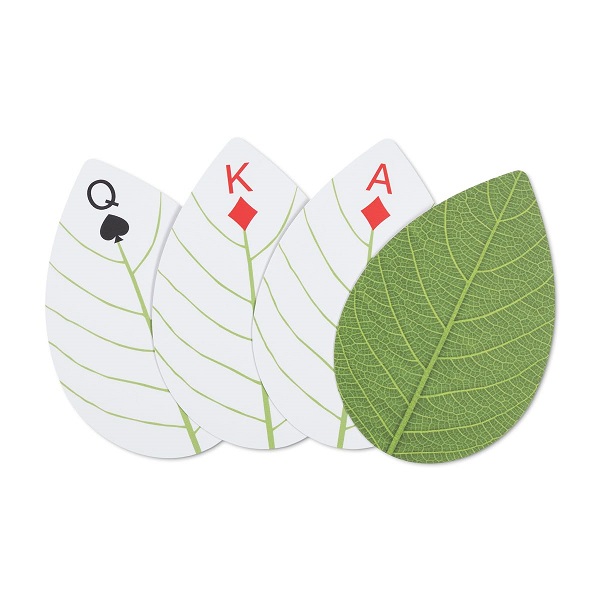
Get a Custom Non-Standard Playing Cards Quote from WellCards
How long does a card sample take to arrive?
Physical samples typically ship within seven days of approval. That window gives designers enough time to test non-standard formats — tarot-length cards, square decks, oversized flash cards. Before committing to a full print run, which usually takes two to four weeks.
Does the prototype cost get wasted if the order moves forward?
No. Prototype cost gets credited back to the final order once production begins. Designers pay for confidence, not for a disposable sample. That credit structure removes the financial excuse for skipping the physical proof. A step too many first-time deck creators learn to regret only after the shrink wrap comes off a bad batch.
How Do You Select A Print Production Partner?
Selection comes down to four checkpoints: pricing structure, project experience, production risk, and compliance certification. Skipping any one of these exposes an indie card project to inflated costs, shipping delays, or a deck that never clears customs. The steps below lay out a practical order for evaluating a manufacturer for a non-standard playing cards design project.
Compare pricing structures first. Factory-direct manufacturers cut production costs by 30 to 50 percent compared with intermediary printing services. That margin often covers the gap between a self-funded print run and a project that stalls before launch.
Review the manufacturer’s client base. Printers serving brands, educators, and distributors across global markets typically show broader hands-on experience with unusual card shapes, sizes, and finishes.
Weigh partnership against going it alone. Independent card production runs expensive and slow, eating up both artwork hours and budget. An experienced partner absorbs much of that risk before a single card gets printed.
Confirm certification coverage. A manufacturer holding EU and US compliance certifications lowers the chance of a shipment getting held at customs or rejected for material noncompliance.
Does Factory-Direct Pricing Actually Save Money?
Yes. Cutting out intermediary printing services drops production costs by 30 to 50 percent under factory-direct pricing models. For a designer funding a print run independently, that margin often decides wh
What Mistakes Derail Non-Standard Card Printing?
Four errors account for most failed print runs among independent designers. Color drift, misaligned symmetry, skipped prototypes, and weak stock choices each turn a promising deck into a costly reprint.
Designers working in RGB before submission set themselves up for disappointment. Printers process files in CMYK, and artwork built outside that color space shifts tone once it hits press. A deck that looked vibrant on screen ends up muddy, apartment, or off-brand. Converting files to CMYK early — not as a last-minute fix — keeps colors predictable across the entire run.
Why does symmetry matter so much on playing cards?
Standard cards rotate 180 degrees, so half the design has to mirror the other half exactly. Non-standard playing cards design raises the stakes further. Custom shapes, indices, and border art all need precise alignment at the rotation point. Skipping that check produces visible misregistration — blurred corners, doubled lines, crooked pips. That no amount of strong illustration work can hide.
Three habits separate reliable outcomes from repeated reprints:
Build every file in CMYK before sending it to the printer.
Check rotated symmetry against a physical mockup, not just a screen preview.
Order a prototype before committing to a bulk run, since proofs and prototypes come included in the process.
Confirm the card stock meets a durability benchmark, such as a 1,000+ shuffle guarantee, before locking in the material.
Skipping the prototype step proves the costliest shortcut. Specification errors that slip past a digital proof reach full production instead, multiplying the cost of the fix. Cheap, unverified stock carries the same risk. A deck without a shuffle-tested benchmark wears out fast, undercutting the design work poured into it.
FAQ
What should designers finalize before starting artwork?
Genre and mechanics come first, since rule complexity shapes card layout and quantity. Designers then build assets in CMYK, request digital proofs, order a physical prototype, and select a manufacturing partner for irregular formats.
Why involve a manufacturer like WellCards early in the design process?
WellCards offers full OEM/ODM design support, guiding designers through irregular formats before printing starts. Digital proofs and physical prototypes catch spec errors early. The Lanxi City, Zhejiang facility gives designers one contact from concept to finished deck.
What determines the right non-standard card format for a deck?
Format choice starts with gameplay actions like shuffling, dealing, and discarding, not the printer’s catalog. Designers then lock exact dimensions, layer in finishing details like foiling and embossing, and check certification requirements for the target market.
 English
 Deutsch
 Français
 Polski
 Português do Brasil
 Español
 日本語
日本語 Русский
 العربية
 Italiano
 Nederlands
 Türkçe
 한국어
한국어