
When it comes to playing card tuck boxes, custom tuck boxes turn a card deck into a branded object, signaling quality before a single card gets shuffled. Foiling, embossing, and precise custom sizing communicate production value instantly, a critical factor for crowdfunding campaigns judged on first impressions. WellCards builds boxes matched to deck dimensions, backed by a 1,000+ shuffle durability guarantee and factory-direct pricing.
Why Does Tuck Box Design Shape First Impressions?
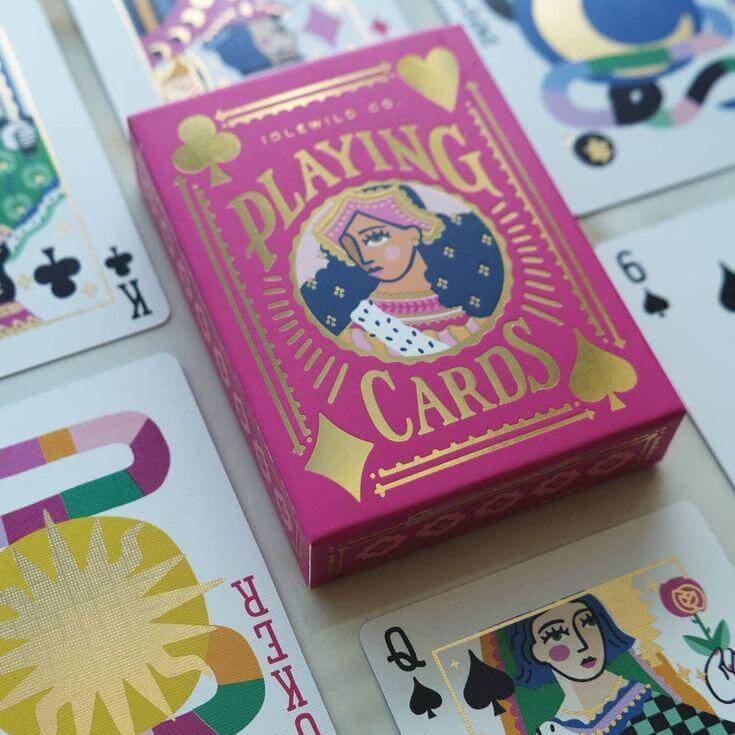
A deck’s box speaks before a single card gets pulled. For crowdfunding campaigns and indie card games competing for a backer’s attention, that first two seconds of visual contact often decides whether a product feels premium or forgettable. Packaging is not a container. It functions as part of the entire product experience, shaping how a customer perceives quality before the deck ever leaves the box.
Get a Custom Playing Card Quote from WellCards
Consider what playing card tuck boxes actually accomplish beyond storage. A well-built box:
Adds perceived value to the deck inside it
Protects cards from bending, moisture, and shelf wear
Reinforces brand identity through color, typography, and finish
Signals production quality to backers, retailers, and reviewers
For a magician selling custom decks or a studio launching a Kickstarter tabletop game, that perceived value translates directly into trust. Backers judge production quality by the box long before they judge the game mechanics.
Does the box really work as marketing, not just packaging?
Yes. Custom playing card boxes double as promotional tools, not merely protective shells. Branding printed on the box travels wherever the deck travels. A convention table, a magic shop shelf, a friend’s game night. That repeated exposure builds recognition without extra ad spend.
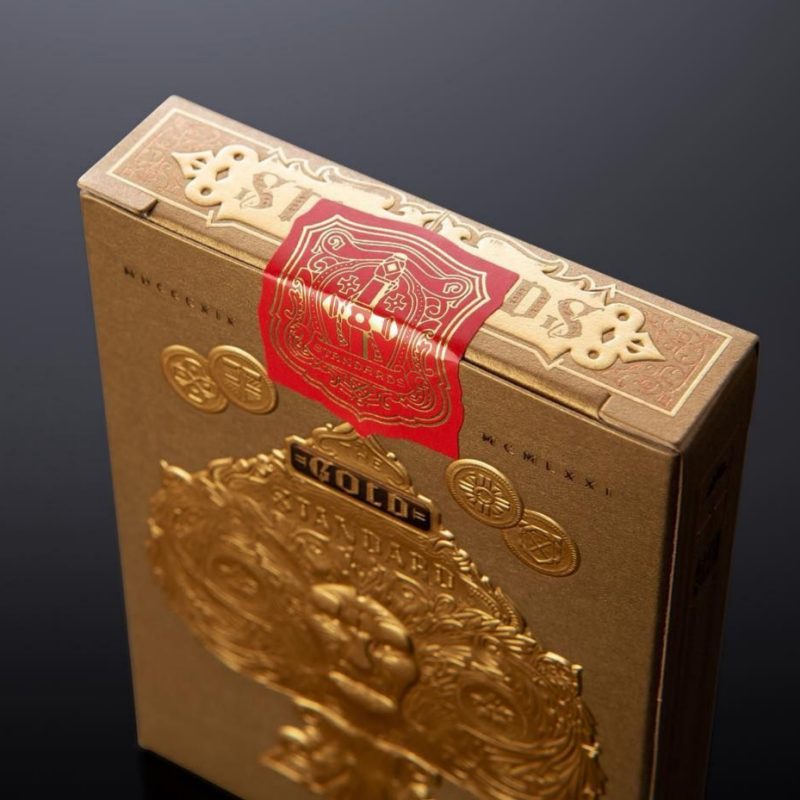
WellCards builds this thinking into its casino-grade card production. Custom sizing, foiling, embossing, and bespoke packaging options let designers match a box finish to a deck’s tone, whether that’s a minimalist matte for a strategy game or a foil-stamped tuck box for a limited collector’s run. The box becomes a design decision, not an afterthought bolted on after printing wraps.
What Makes a Tuck Box Truly Functional?
Function starts with the fold. A standard playing card tuck box takes shape from thick paper stock, folded into a flap-top structure built to hold a deck securely. That folded flap does double duty. It seals the box shut and gives the box a clean, finished edge without extra hardware.
Capacity matters just as much as construction. A single-piece box typically holds up to 110 cards. Pack two decks side by side, and that number climbs to 220. Anything beyond that range pushes the paper past its limit. A deck stuffed into an undersized box bulges at the seams, softens at the corners, and eventually splits along the fold.
Does deck size change the box design?
Yes — high card counts call for a different structure entirely. Decks that exceed standard capacity need a two-piece box rather than a single folded shell. A bulging box wears out fast and looks unstable on a shelf or in a Kickstarter unboxing video.
Can packaging be built around a specific deck?
Custom sizing solves the mismatch problem before it starts. WellCards builds boxes to exact deck specifications, with options that include:
Custom sizing for oversized or mini decks
Foiling and embossing for retail-ready shine
Rounded corners and hole punching for tactile finishing
Bespoke packaging shapes for collectible or promotional runs
Full OEM/ODM design support backs each of these options. Deck designers get packaging engineered around their card count and stock thickness, not a generic template forced to fit. That precision is what separates a box that protects a deck from one that merely wraps it.
Which Materials And Finishes Signal Premium Quality?
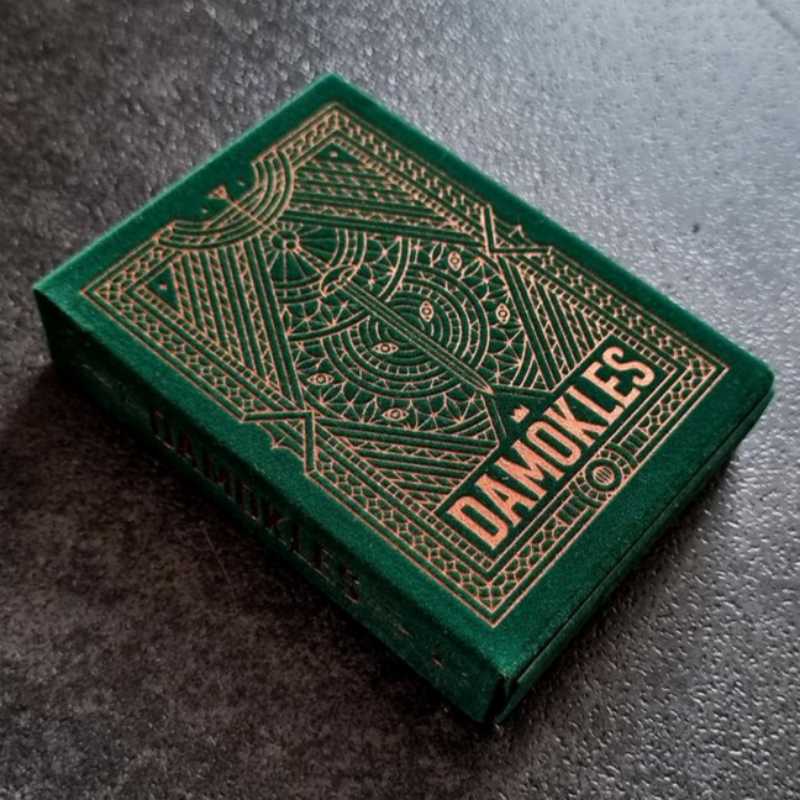
Material choice separates a box that merely protects a deck from one that elevates it. WellCards builds decks and playing card tuck boxes using premium paper or PVC options, giving designers a foundation suited to the product’s purpose. PVC withstands heavy shuffling and travel. Paper stock delivers a softer, more tactile finish favored by collectors and boutique card brands.
Get a Custom Playing Card Quote from WellCards
Finish work is where a deck starts to feel expensive. Foiling and embossing raise the perceived value of a boxed deck without changing its footprint on a shelf or in a crowdfunding unboxing video. Some manufacturers pair Coated Semigloss paper with matte or soft-touch laminate coatings. A combination that reads as premium under studio lighting. Camera flash alike, a detail that matters when filming backer-facing trailer footage.
Durability backs up the aesthetics. WellCards guarantees decks for 1,000+ shuffles. The box wrapped around each deck protects a product engineered to outlast casual wear. Compliance rounds out the picture. WellCards maintains FSC, REACH, and EN71 certification across EU and US markets, a baseline that matters for promotional merchandise brands selling across borders.
What Finish Should A First-Time Card Deck Designer Choose?
Foiling suits logos and small accent details. Embossing suits texture-driven branding, the kind magicians and premium boxed-set makers favor. Soft-touch laminate creates the tactile unboxing moment backers screenshot and share. Matte finishes also hide fingerprints better than gloss during trade shows and live demos.
Material and finish decisions compound quickly. A magician’s deck built for one-handed cuts needs different stock than a limited-edition reward tier meant to sit untouched on a collector’s shelf.
How Do Templates And Prototypes Prevent Costly Errors?
Errors get caught before a print run locks in, not after thousands of decks roll off the press. A misaligned die-line or the wrong stock thickness, discovered on paper, costs nothing. The same mistake discovered in a shipped carton costs a launch.
Template files exist for this exact reason. A designer downloads the file, drops artwork into a program like Adobe Illustrator, and sends it back for production. Playing card tuck boxes built this way match deck dimensions before a single sheet gets printed. Kickstarter creators juggling tight budgets cannot afford a reprint mid-campaign, so this step matters more than it looks.
Why does card stock change the template?
Fit depends on more than box size. Thickness and card count both shift the math, which is why separate templates exist for different stocks. A magician’s PVC deck and a two-deck bundle for a strategy game will not share the same fold lines.
WellCards backs the template process with production safeguards:
Digital proofs arrive within 24 to 48 hours, catching layout issues fast.
Physical prototypes follow, and their cost gets credited back to the finished order.
Every order runs through triple-check quality control across pre-press, printing, and final inspection.
Physical samples ship within seven days, letting a creator confirm tuck box fit before committing to bulk.
What happens to prototype costs after ordering?
Nothing gets wasted. Prototype spending applies directly to the bulk order once specifications are approved. That structure removes the usual tension between testing thoroughly and spending carefully, a tension every promotional merchandise brand knows well.
What Should Crowdfunding Creators Demand From Manufacturers?
Crowdfunding creators should demand pricing transparency, proven scale, and shipping that reaches backers without delay. A packaging vendor unable to answer basic questions about capacity or compliance documentation isn’t ready for a live campaign. Backers notice late shipments long before they notice a well-designed box.
Get a Custom Playing Card Quote from WellCards
Cost control comes first. Factory-direct pricing cuts packaging costs compared with outsourced vendors, which matters when a campaign budget is already stretched across stretch goals and freight. Every dollar saved on playing card tuck boxes becomes a dollar available for card stock upgrades or bonus content.
Scale comes second. A facility producing more than one million decks monthly, backed by a a notable share on-time delivery rate, handles the jump from a hundred backers to ten thousand without missing a fulfillment window.
How many decks do small studios need to order?
Flexible minimum order quantities matter for anyone testing a new game concept. Orders starting at 500 decks let indie studios. Solo designers commission boxed decks without draining a campaign budget on inventory they can’t move.
Does the manufacturer ship internationally?
Backers live everywhere, and fulfillment has to follow them. Shipping through DHL, FedEx, and UPS reaches more than 200 countries, arriving with full compliance documentation so customs delays don’t stall a delivery promise.
A production partner working from a modern facility in Lanxi City, Zhejiang carries three decades of manufacturing history into that promise. Creators should ask for:
Documented pricing comparisons against outsourced vendors
Verified monthly production capacity
Minimum order flexibility for small print runs
International shipping coverage with compliance paperwork
Anything less is a gamble with someone else’s pledge money.
Custom playing card tuck boxes represent a critical intersection of functionality. Brand identity, directly influencing how products are perceived from the moment of purchase. The strategic selection of materials, finishes, and structural design transforms packaging from mere protection into a powerful marketing asset that communicates quality and professionalism. By prioritizing thoughtful packaging design alongside card production excellence, manufacturers establish lasting impressions that reinforce brand value and customer loyalty throughout the product lifecycle.
FAQ
Why does a tuck box affect perceived product quality?
Foiling, embossing, and precise sizing signal production value instantly, which matters most for crowdfunding campaigns judged within seconds. A well-built box adds perceived value and reinforces brand identity through color, typography, and finish.
How does packaging function as marketing?
Branding printed on the box travels wherever the deck travels, whether a convention table or a game night, building recognition without extra ad spend. WellCards, based in Lanxi City, Zhejiang, China, builds this into its factory-direct card production.
What happens if a box doesn’t match the deck size?
An undersized box causes bulging seams, softened corners, and eventual splitting along the fold. WellCards solves this with custom sizing matched to exact deck specifications, including two-piece boxes for decks exceeding standard capacity.
 English
 Deutsch
 Français
 Polski
 Português do Brasil
 Español
 日本語
 Русский
 العربية
 Italiano
 Nederlands
 Türkçe
 한국어