
Playing cards fall into several distinct types: standard poker and bridge decks, tarot cards, casino-grade decks, educational flash cards. Custom-printed decks for branding or promotional use. Manufacturers like WellCards, operating since 1990, produce casino-grade custom decks guaranteed to withstand 1,000+ shuffles, serving clients across gaming, education, and corporate markets worldwide.
Key Takeaways
The standard 52-card French-suited deck remains the most common playing card pack used worldwide today.
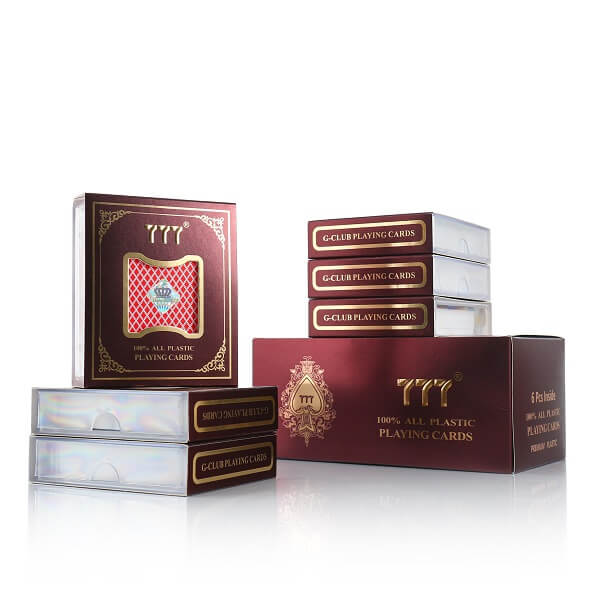
Playing cards are manufactured from card stock, plastic-coated paper, cotton-paper blends, or thin plastic materials.
At least 10 distinct types of playing cards exist beyond the classic Bicycle deck with standard court cards.
Custom playing card decks offer unique motifs and designs unavailable in traditional retail card selections.
What Makes Playing Cards So Universally Recognized?
Playing cards earn global recognition through a combination of precise material construction and a remarkably flexible range of uses. A standard playing card is a piece of specially prepared card stock, heavy paper, thin cardboard, plastic-coated paper, cotton-paper blend. Thin plastic — each marked with distinguishing motifs that make every card identifiable at a glance.
That material versatility is only part of the story. The most common type of playing card in the West is the French-suited, standard 52-card deck, a format. Widely adopted that it serves as the default reference point for nearly every card-related product category.
Get a Custom Playing Cards Quote from WellCards
What are playing card types used for beyond card games?
Playing cards extend well past the game table. Common applications include:
Card games — the primary and most widespread use
Magic tricks — a staple of close-up and stage performance
Cardistry — the art of card flourishing and manipulation
Card throwing — a niche but established skill discipline
Card houses — structural stacking as both hobby and competition
Collecting — premium and custom decks as curated objects
What materials make a playing card durable enough for repeated use?
Material choice directly determines how long a deck performs. Manufacturers select from card stock, plastic-coated paper, cotton-paper blends, and thin plastic depending on the intended use case. Each substrate affects shuffle feel, longevity, and print quality. Which is why playing card types differ so significantly across gaming, educational, and promotional applications.
What Are the Four Suits in a Standard Deck?
A standard deck contains 52 cards divided into four suits: Spades, Hearts, Diamonds, and Clubs. The standard 52-card deck is the most common pack of playing cards used today. The only traditional pack used in English-speaking countries.
Each suit holds 13 cards, running from Ace through King. Four suits multiplied by 13 cards each produces the complete 52-card structure that powers games from Poker to Bridge to Solitaire.
The four suits at a glance:
That balanced architecture is not accidental. The even distribution across all four suits creates the mathematical fairness that card game designers depend on.
Why Does Every Suit Have 13 Cards?
Each suit runs from Ace to King — a sequence of 13 distinct values. That range gives game designers enough variation to build complex rules around rank. Hierarchy without making a deck unwieldy to hold or shuffle.
What Playing Card Types Use All Four Suits?
Most traditional card games — Poker, Blackjack, Bridge, and Solitaire among them — rely on the full four-suit, 52-card structure. The suits create the playing card types framework that manufacturers like WellCards, producing custom decks since 1990, build every print run around. Clients ordering casino-grade or promotional decks almost always start from this proven 52-card foundation, then layer in custom design, foiling. Specialty finishes to differentiate their product.
What Are the Main Playing Card Types by Design?
Playing card types span a remarkably broad spectrum, from stripped-down standard decks to elaborately customized productions with bespoke artwork on every surface. Clients who overlook design variety risk commissioning cards that fail to differentiate their brand in a crowded market.
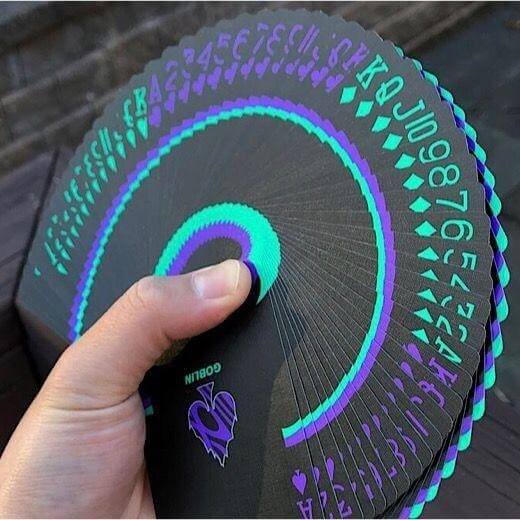
The range of creative playing cards available today is genuinely wide. Many decks display inventive graphic design across heavily customized faces and pips, card backs. Stylish tuck boxes — each element an opportunity to reinforce a brand identity or educational purpose. Design variety is not a modern invention, either. Regional styles were already diverging across Europe during the 15th and 16th centuries. Playing cards spread from culture to culture and absorbed local artistic traditions.
Get a Custom Playing Cards Quote from WellCards
What design elements distinguish one playing card type from another?
The primary design variables are the face and pip artwork, the card back pattern, and the packaging. A standard deck keeps these elements minimal and functional. A custom deck treats each surface as a canvas — foiling, embossing. Bespoke illustration transform an ordinary card into a collectible or a branded asset.
Key design categories clients typically choose between include:
Standard design — traditional suit symbols and court card illustrations, optimized for universal recognition
Custom illustrated — original artwork on faces, pips, and backs, produced with full OEM/ODM support
Premium finish — standard or custom layouts enhanced with foiling, embossing, or specialty coatings
Material variants — premium paper stock or durable PVC, each suited to different use cases
How does material choice affect playing card design options?
Material selection shapes both the visual outcome and the product’s longevity. Premium paper accepts fine print detail and specialty finishes like foiling and embossing with precision. PVC construction prioritizes durability, making it the preferred choice for high-frequency gaming environments. WellCards produces both material types with full OEM/ODM design support and EU/US certification for global export.
What Materials and Finishes Define Card Quality?
Card quality is determined by the substrate, surface treatment, and printing technique applied during manufacturing. Clients who overlook these factors end up with cards that warp, fade. Fall apart under regular use — a costly mistake in gaming, casino, or retail environments.
Playing card types vary widely in durability, and the material choice drives most of that difference. WellCards produces casino-grade custom playing cards in both premium paper and PVC, each printed to precise specifications for gaming, promotions, or retail applications. PVC cards resist moisture and bending. Premium paper stocks deliver a crisp, professional feel preferred in high-volume shuffle environments.
What Finishes Elevate a Custom Card’s Appearance?
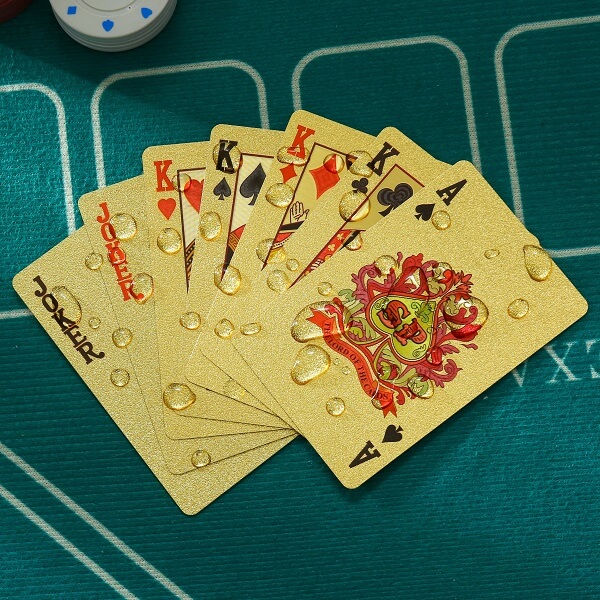
Premium finishes transform a functional card into a branded asset. Foil stamping, embossing, and letterpress printing are among the techniques that define high-end card production. Each adding tactile depth and visual distinction that standard offset printing cannot replicate. Rounded corners, custom sizing, and hole punching extend the finish options further, giving clients precise control over the final product.
How Durable Are Premium Playing Cards Under Heavy Use?
Durability is measurable, not subjective. WellCards guarantees a minimum of 1,000 shuffles per deck, a benchmark that reflects the demands of casino and intensive gaming environments. Cards that fall short of this threshold create operational disruptions and replacement costs that compound quickly at scale.
Compliance reinforces quality at every stage. WellCards maintains FSC, REACH, and EN71 certifications, meeting EU and US safety and environmental standards for global export. The following summarizes the core material and finish options available:
Premium paper — crisp feel, ideal for high-volume gaming
PVC — moisture-resistant, extended lifespan
Foil stamping and embossing — premium visual and tactile finish
Custom sizes and rounded corners — precise specification control
How Do You Source the Right Custom Playing Cards?
Sourcing the right custom playing cards starts with finding a manufacturer that combines verified quality, transparent timelines, and factory-direct economics. Brands and distributors that skip this step risk delayed launches, compliance failures. Inflated unit costs that erode margins before a single deck reaches retail.
Playing card types vary widely — casino-grade, educational flash cards, promotional decks — and each demands different material specs, certifications, and finishing options. WellCards has manufactured custom cards since 1990, bringing over 35 years of expertise to every order. Flexible minimum order quantities starting at 500 decks make the process accessible for emerging brands and established distributors alike.
Get a Custom Playing Cards Quote from WellCards
What Should Clients Expect From the Sampling Process?
WellCards delivers digital proofs within 24–48 hours of a brief, followed by physical prototypes credited back to the final order. That credit structure removes the financial risk of prototyping. Clients confirm specifications before committing to a full production run.
How Quickly Can Bulk Orders Ship?
Factory-direct pricing saves clients 30–a notable share compared to intermediary sourcing. Samples arrive in seven days; bulk orders complete in two to four weeks. WellCards ships to over 200 countries through DHL, FedEx, and UPS, with full compliance documentation included on every shipment.
Key sourcing advantages at a glance:
Factory-direct savings of 30–a notable share on unit costs
Digital proofs in 24–48 hours, physical prototypes credited to orders
Samples in 7 days, bulk fulfillment in 2–4 weeks
Global delivery to 200+ countries with a a notable share on-time delivery rate
MOQs starting at 500 decks
From standard poker decks to tarot sets, educational flash cards to casino-grade specialty designs, the world of playing cards reflects remarkable diversity in purpose, material, and construction. Selecting the right type begins with understanding how format, finish, and durability align with your specific application. Whether you serve the gaming industry, the classroom. The corporate training room, the card type you choose directly shapes user experience and product longevity. Partnering with an experienced manufacturer ensures those choices translate into consistent, compliant, market-ready results.
Playing Card Types | FAQs
What are the main types of playing cards?
The main types include standard poker and bridge decks, tarot cards, casino-grade decks, educational flash cards. Custom-printed decks for branding or promotional use.
What is the most common type of playing card used worldwide?
The French-suited, standard 52-card deck is the most common pack of playing cards used today. The only traditional pack used in English-speaking countries.
How durable are casino-grade custom playing card decks?
WellCards, operating since 1990 in Lanxi City, Zhejiang, China, produces casino-grade custom decks guaranteed to withstand 1,000+ shuffles.
 English
 Deutsch
 Français
 Polski
 Português do Brasil
 Español
 日本語
日本語 Русский
 العربية
 Italiano
 Nederlands
 Türkçe
 한국어
한국어