
Card thickness determines durability, handling and in-play performance. This article explains measurement standards, manufacturing stages, common thickness ranges, card stock effects, and the commercial value of custom thickness.
Measurement Specifications
Playing cards are standardised for size and thickness. The conventional size is 2.5 x 3.5 inches (63 mm x 88 mm); typical thickness is 0.3–0.4 mm, which balances durability with shuffleability.
Manufacturing Processes
Manufacturing follows stages to meet quality targets.
- Material Selection : Paper and 100% plastic are common; material choice affects thickness and lifespan.
- Printing Techniques : Offset printing produces sharp, consistent artwork.
- Finishing Options : Matte, gloss or linen finishes change feel and add minimal thickness.
WellCards produces decks with controlled thickness and stock to meet performance and appearance specifications.
Variations in Thickness
Thickness varies by intended use and material.
- Non-Standard Cards : Heavier stock (350 gsm+) is used for greater durability.
- Luxury Cards : Thicker materials and premium finishes enhance tactile appeal.
WellCards offers custom thickness choices so clients can match stock to their application.
What Are the Standard Thickness Measurements for Playing Cards?
Standard playing cards are usually 0.3–0.4 mm, a range that balances durability and flexibility for handling.
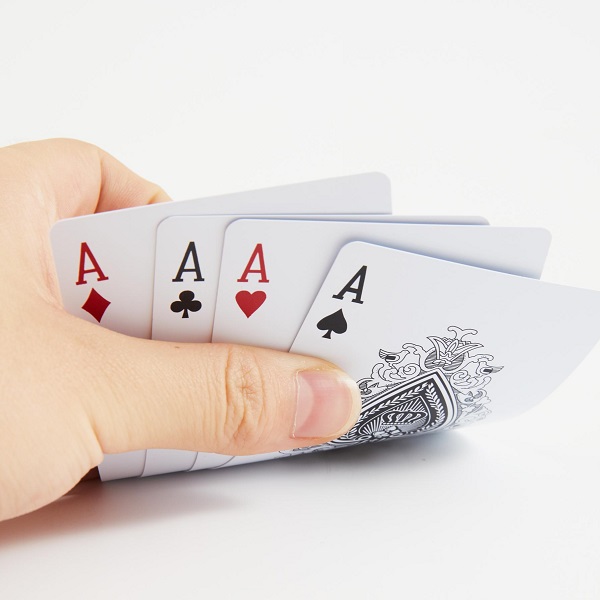
Get a Custom Standard Playing Cards Quote from WellCards
How Is Playing Card Thickness Measured in Millimeters and GSM?
Thickness is measured in millimetres and related to grams per square metre (gsm); using both helps compare construction and expected performance.
Beyond physical measures, computational methods analyse thickness and its link to skill acquisition and card manipulation.
Measuring Playing Card Thickness for Skill Analysis
The authors propose a device with the form factor of a playing card to support computational measurement and analysis of users’ skill acquisition in card manipulation. The device uses thin sensors patterned with conductive ink to preserve typical card thickness and shape. A prototype implementation was created to record users’ manipulations of a deck.
Card Type Device to Support Acquirement of Card Techniques, 2023
What Are the Typical Thickness Ranges for Poker and Standard Cards?
Poker and standard cards commonly fall within 0.3–0.4 mm; poker cards are built to withstand heavier handling and frequent use.
How Does Card Stock Type Affect Playing Card Thickness and Durability?
Card stock directly sets thickness and long-term durability.
- Black Core Paper : ~300 gsm; offers good opacity and strength.
- Plastic Stock : Thicker, more durable and moisture-resistant.
Choose stock based on longevity, handling and cost considerations.
See specialised literature for detailed paper and board properties and their effect on product performance.
Paper Grades & Properties for Playing Card Stock
Paper grades classify paper and board products by quality, appearance and performance for given applications. Some grades are standardised for specific functions. The chapter summarises key physical, optical, mechanical, thermal and electrical properties of paper and board, and explains which properties are critical for particular uses.
Conventional Paper: Types and Properties, MC Area, 2025
What Are the Differences Between Paper and Plastic Card Stocks?
Paper and plastic stocks differ in thickness, durability and typical uses.
- Thickness Differences : Paper usually 280–330 gsm; plastic is generally thicker.
- Durability Comparison : Plastic better resists moisture and wear.
- Usage Examples : Paper for casual play; plastic for professional or outdoor settings.
How Does Card Stock Weight Influence Card Performance?
Heavier card stock increases durability and gives a firmer hand feel; weight also changes shuffling and dealing behaviour, which affects player experience.
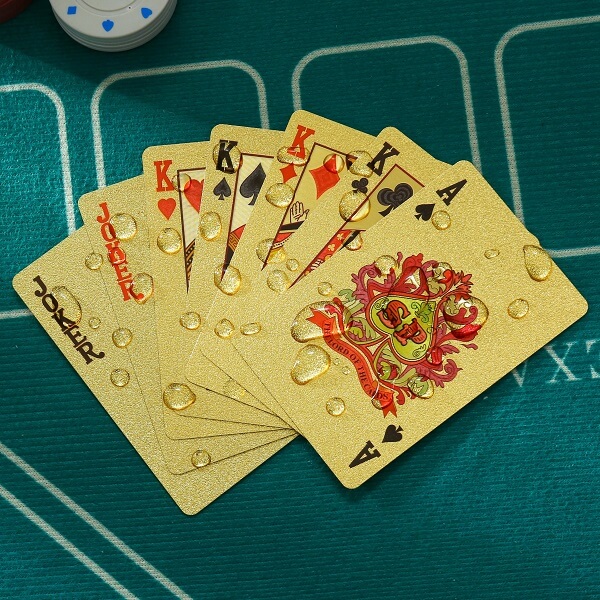
Get a Custom Standard Playing Cards Quote from WellCards
What Custom Thickness Options Are Available in Playing Card Manufacturing?
Manufacturers offer custom thickness ranges to meet game, branding or promotional requirements.
Custom thickness and deck customisation provide benefits for specialised use cases.
Custom Playing Card Thickness & Deck Customization
Consumers may purchase customised playing card decks where thickness is tailored to intended use, enhancing portability and functionality for particular applications.
The playing card platform, N Altice, 2014
How Does Custom Printing Enable Thickness Variations?
Printing and finishing choices—materials, coatings and lamination—determine final thickness and handling properties.
What Are the Benefits of Choosing Custom Thickness for Business Needs?
Custom thickness yields practical commercial advantages.
- Durability and Longevity : Thicker cards last longer, lowering replacement frequency.
- Enhanced Handling : Tailored thickness improves feel, shuffleability and dealing.
- Cost Efficiency : Higher-quality stock can reduce lifetime replacement costs.
How Do Thickness Specifications Impact Playing Card Quality and Client Success?
Correct thickness specifications help resist wear and ensure a consistent user experience, supporting client satisfaction and repeat business.
Why Is Precise Thickness Control Critical for Manufacturing Standards?
Precise thickness control meets manufacturing tolerances and ensures uniform performance across production runs; WellCards applies controls to meet these standards.
How Does Thickness Relate to On-Time Delivery and Cost Efficiency?
Thickness affects packaging, handling and shipping. Thicker decks may need extra care and influence lead times, but proper material selection often lowers lifecycle costs.
For those interested in standard playing cards , WellCards offers several options.
What Is the Thickness of a Standard Playing Card | FAQs
What materials are commonly used in playing card manufacturing?
Most cards are paper or plastic. Paper commonly uses 280–330 gsm; plastic is thicker and more moisture-resistant. Material choice affects handling and lifespan.
How do different finishes affect the thickness and feel of playing cards?
Matte, gloss and linen finishes change tactile properties and appearance; finishes add a small amount of thickness and can alter shuffle behaviour.
Are there specific thickness requirements for tournament play?
Many tournaments prefer 0.3–0.4 mm to standardise handling and ensure fair play.
What role does card weight play in gameplay?
Card weight (gsm) affects durability and feel; heavier cards offer firmer handling and improved card control.
Can custom thickness options improve branding for businesses?
Yes. Custom thickness aligns product feel with brand positioning and perceived quality.
How does the thickness of playing cards affect their storage and transport?
Thickness impacts packing density and protection needs. Thicker decks require more space and may need protective packaging, which affects shipping costs.
What innovations are being explored in playing card thickness measurement?
Emerging work includes sensor-equipped card-form devices that measure thickness while recording interactions to study manipulation techniques and performance.
Conclusion
Specifying and controlling card thickness ensures consistent performance and longevity. Choose stock and finish to match your needs, and consult suppliers such as WellCards for options and guidance.
 English
 Deutsch
 Français
 Polski
 Português do Brasil
 Español
 日本語
日本語 Русский
 العربية
 Italiano
 Nederlands
 Türkçe
 한국어
한국어