
UV reactive playing cards use special fluorescent inks that absorb light and glow vividly under blacklight, revealing neon colors and hidden details invisible in standard lighting. These decks enhance cardistry and magic routines with dramatic visual effects. WellCards manufactures custom UV-reactive decks with 1,000+ shuffle durability, factory-direct pricing, and EU/US compliance certifications.
Get a Custom UV-Reactive Playing Card Quote from WellCards
What are UV reactive playing cards?
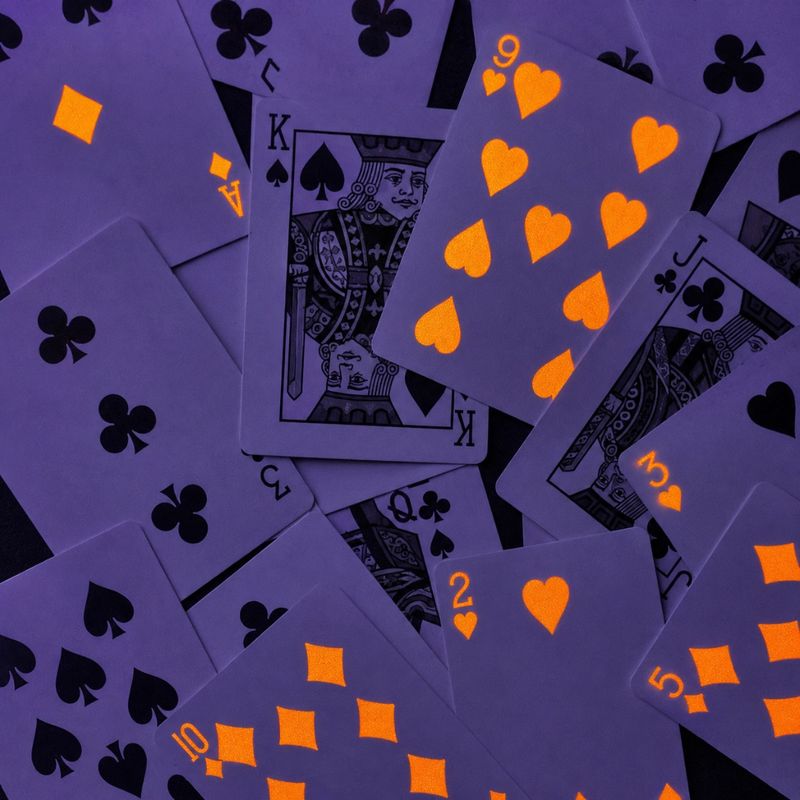
UV reactive playing cards are standard playing cards printed with specialized fluorescent inks that activate under ultraviolet or black light. The inks absorb invisible UV radiation and re-emit it as visible light, transforming an ordinary deck into a luminous display of vibrant color. Without a UV source, the cards appear conventional. Under black light, the printed elements ignite.
This technology differs fundamentally from phosphorescent glow-in-the-dark products. Fluorescent inks respond only while the UV source remains active. Phosphorescent materials store light energy and release it gradually after the source disappears. A deck described as “glow in the dark” on a retail listing often means fluorescent, not phosphorescent. The distinction matters for performance contexts where controlled illumination timing is critical.
How do fluorescent inks work on playing cards?
Fluorescent inks contain pigments that absorb high-energy ultraviolet wavelengths and instantly convert them to lower-energy visible light. The conversion happens in real time. When the black light switches off, the glow stops immediately. This property makes the inks ideal for magic routines and cardistry performances where the performer controls the reveal moment precisely.
The inks print onto standard card surfaces using conventional offset or digital processes. Manufacturers apply fluorescent layers to card faces, backs, and tuck boxes. Some decks feature fluorescent ink on both sides, intensifying the effect when cards are fanned or spread under UV spot lighting.
What hidden features do UV reactive decks reveal?
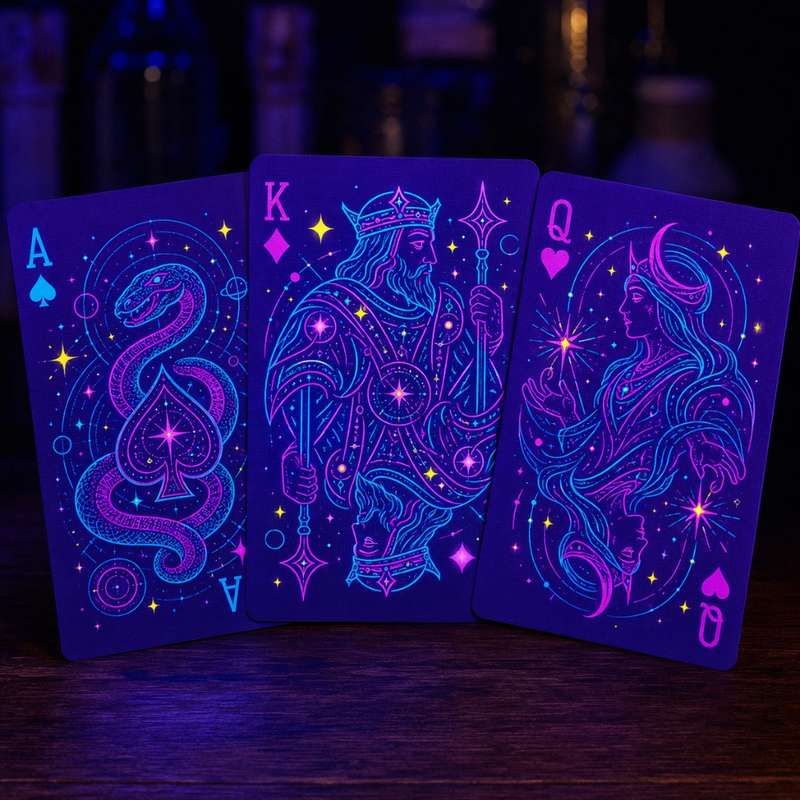
Many UV reactive decks conceal secondary artwork visible only under black light. A card back that appears to show a simple geometric pattern in daylight might reveal an intricate illustration, a secret message, or a marked system under UV. This dual-state design serves magicians who need hidden information accessible on demand and cardists who want a dramatic visual transformation mid-routine.
The effect extends beyond novelty. Card designers use fluorescent inks to create layered narratives within a single deck. A tuck box might display one title in normal light and a completely different design under UV. The technology rewards close inspection and repeated viewing, which drives collector engagement and repeat purchases.
How does UV reactive ink technology work?
UV reactive playing cards rely on fluorescent ink chemistry rather than phosphorescent glow materials. The ink absorbs ultraviolet light and re-emits it as visible light, producing a bright neon effect invisible under normal lighting. Without a UV source, the printed surface appears ordinary. Under blacklight, the transformation is immediate and complete.
What makes fluorescent ink different from glow-in-the-dark ink?
Fluorescent ink does not store light. It converts UV radiation into visible color in real time. Cut the blacklight and the effect vanishes instantly. Phosphorescent pigments, by contrast, absorb energy and release it slowly over minutes. That distinction matters for performance. A magician working under controlled UV spot lighting needs the instant on/off response fluorescent ink provides.
Where is the ink applied on the deck?
High intensity fluorescent ink is applied to both the card front and back, as well as on the tuck box. The ink intensifies under UV lighting, creating what MPC describes as a “wow factor” during reveals. Designers can combine this with custom sizes, foiling, and embossing options available from WellCards for enhanced visual impact. The card stock itself uses a finish engineered for smooth fanning and snappy handling, even with the added ink layer. MPC’s M30 linen air light stock with BETA finish produces a deck that remains flexible and responsive despite the specialized coating.
What are the main uses for UV reactive decks?
UV reactive playing cards serve distinct functions across performance, gaming, and education. The primary applications center on visual transformation under black light. A deck that appears ordinary in daylight reveals vibrant neon designs or hidden elements when exposed to UV illumination. Without this specific lighting condition, the deck’s full design remains invisible, a loss of impact that defeats the purpose of the specialized printing.
Get a Custom UV-Reactive Playing Card Quote from WellCards
How do magicians use UV reactive cards in performances?
Magicians and cardists use these decks in dark environments with UV spot lighting. The Fluorescent Playing Cards by MPC notes that the deck is specifically made for showing off magic tricks under black lighting. The sudden reveal of glowing ink creates a moment of surprise that standard cards cannot replicate. This visual shift adds a layer of theatricality to close-up routines and stage work alike.
What makes UV decks popular for game nights?
Game nights and poker sessions gain a distinct atmosphere from UV reactive decks. Amazon listings highlight vibrant neon designs that glow under UV light, paired with durable protective coatings. Collectors also seek out these decks for their unique aesthetic. The visual pop under black light transforms a standard card game into an immersive experience that standard printed decks simply do not deliver.
Custom card creators and game designers exploit the technology for hidden elements. 52Kards reports that fluorescent decks reveal secret messages under blacklight. A designer might embed clues, faction symbols, or narrative details visible only under black light. This mechanic adds replay value and discovery to tabletop games.
WellCards serves brands and educators who apply UV effects to custom flash cards. Training programs and corporate wellness initiatives benefit from design-optimized cards where UV reactive inks highlight key information or gamify learning modules. The engagement boost comes from the interactive reveal, a feature that static print cannot match.
How do UV reactive cards differ from glow-in-the-dark?
UV reactive playing cards demand an active ultraviolet light source to produce their effect. Glow-in-the-dark cards store ambient light and emit it after the light source disappears. The distinction is not cosmetic. It determines where and how a deck performs.
What ink technology powers each card type?
Fluorescent inks drive UV reactive decks. These inks absorb ultraviolet light and re-emit it instantly as visible, vibrant color. The brightness is immediate and intense. Phosphorescent inks power glow-in-the-dark cards. They absorb light energy, store it, and release a softer afterglow over time. Rare Playing Cards notes that ultraviolet decks “come to life” under a black light. 52Kards describes fluorescent decks revealing “vibrant colors and sometimes secret messages” under blacklight. The mechanism differs completely. One requires constant excitation. The other relies on stored energy.
Which deck works best in different environments?
The intended setting dictates the right choice. UV reactive cards excel in controlled black light environments. Cardistry routines, stage magic, and themed game nights benefit from the instant, high-contrast fluorescence. Glow-in-the-dark cards suit complete darkness. No external light source is needed once the deck is charged. A magician performing in a pitch-black theater gains more from phosphorescent afterglow. A cardist under UV spotlights needs fluorescent intensity. WellCards manufactures both types using premium paper or PVC materials. The company holds EU and US certifications for global export compliance. Each deck serves a distinct performance condition. Selecting the wrong type leaves a deck invisible when it matters most.
What should you consider when ordering custom UV decks?
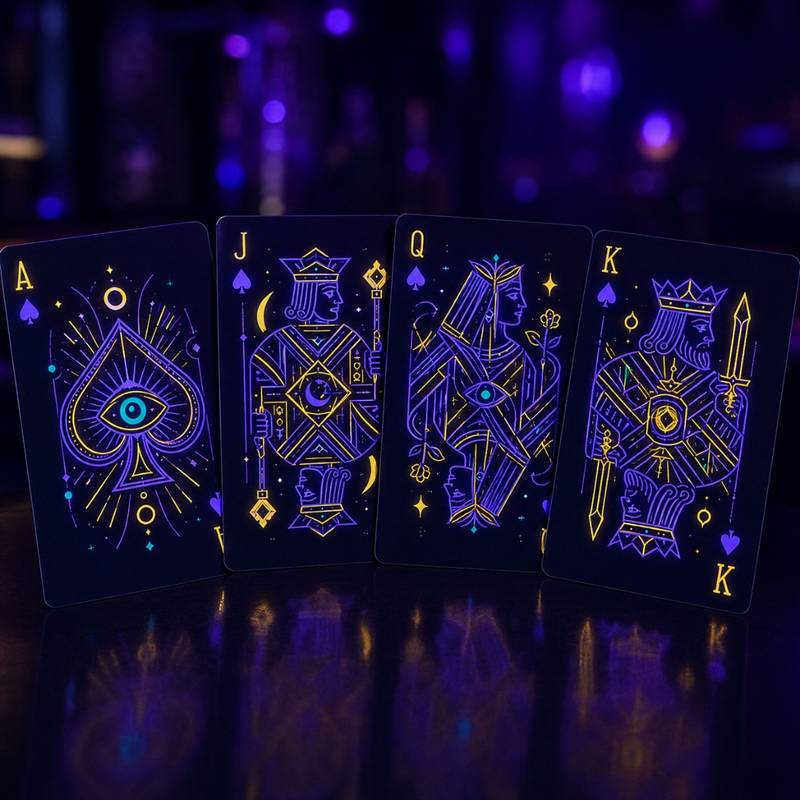
Ordering custom UV Reactive Playing Cards requires evaluating ink performance, design validation, and production timelines. A deck that fails under blacklight or degrades after minimal handling represents wasted investment. Three factors determine whether the final product meets professional standards.
Get a Custom UV-Reactive Playing Card Quote from WellCards
How does UV ink affect card durability?
UV-reactive inks add a functional layer that must not compromise structural integrity. A manufacturer guaranteeing 1,000+ shuffle durability ensures the fluorescent coating withstands repeated handling without peeling or fading. Triple-check quality control across pre-press, printing, and final inspection catches inconsistencies before decks ship. Without these safeguards, UV ink layers separate from card stock prematurely.
What design support is available before production?
Free design consultation helps creators position UV elements for maximum visual impact. Digital proofs arrive within 24 to 48 hours, confirming ink placement and artwork alignment before any physical production begins. Physical prototypes provide the most reliable validation. Creators test UV reactivity and card handling under actual blacklight conditions. Prototype costs credit back to the final order, eliminating financial risk from the sampling phase.
What are the minimum order and turnaround expectations?
Flexible minimum order quantities start at 500 decks. This threshold accommodates boutique creators and larger distributors alike. Samples ship in seven days. Bulk production completes within two to four weeks. Matching these timelines to project launch dates prevents costly delays. Verifying a manufacturer’s on-time delivery record and compliance certifications before committing protects against supply chain disruptions.
FAQ
What are UV reactive playing cards?
UV reactive playing cards use fluorescent inks that absorb ultraviolet light and glow vividly under blacklight, revealing neon colors and hidden details invisible in standard lighting. WellCards manufactures custom decks with 1,000+ shuffle durability.
How do UV reactive playing cards differ from glow-in-the-dark cards?
Fluorescent inks respond only while the UV source remains active, stopping instantly when the light switches off. Glow-in-the-dark cards store light energy and release an afterglow over time.
Conclusion
UV reactive playing cards deliver a dual-state visual experience that standard decks cannot replicate, transforming performance and gameplay through fluorescent inks that respond exclusively to ultraviolet light. Selecting between UV reactive and glow-in-the-dark technology requires matching the deck to the intended environment, from controlled blacklight stages to fully dark venues. For custom production, validating ink durability, reviewing digital proofs, and testing physical prototypes under actual blacklight conditions ensures the final deck performs as designed.
 English
 Deutsch
 Français
 Polski
 Português do Brasil
 Español
 日本語
 Русский
 العربية
 Italiano
 Nederlands
 Türkçe
 한국어